En l'absence d'excitation sexuelle, il n'y aura aucun bénéfice et l'effet du comprimé s'estompera simplement après environ 4 heures. En revanche, le Viagra original et le Sildénafil générique sont disponibles en Viagra générique en ligne en quatre doses : 25 mg, 50 mg, 100 mg. Notre pharmacie en France change la donne pour les hommes en offrant un accès pratique et confidentiel à la commande de pilules pour l’érection.
Today we believe that the oldest living Romanian Olympian, Francisc Horvath, is celebrating his 98th birthday. We featured Horvath in our Olympic medal mysteries series some time ago, as he won bronze in bantamweight, Greco-Roman wrestling at the 1956 Melbourne Games. In response, one reader provided a report that showed him alive in 2021, but others have pointed out sources claiming that he died in 1969 or 1980, and it remains unclear which is correct. Nonetheless, since there is a reasonable chance that he is still alive, we are wishing him a happy birthday!
On the topic of Romanian Olympians, Connor Mah was able to solve a case from 1928 that we covered on this blog several years ago. Back in 2022, we noted that we knew nothing about an individual by the name of Ion Haidu who represented Romania in the decathlon but did not finish. Mah discovered that Haidu’s real name was Kurt Haydn, and that he was born August 15, 1900 and killed in World War II on June 2, 1942.
Today we have a new set of Olympic milestone birthdays, so once again we are going to cover both instead of choosing between them!
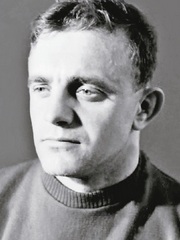
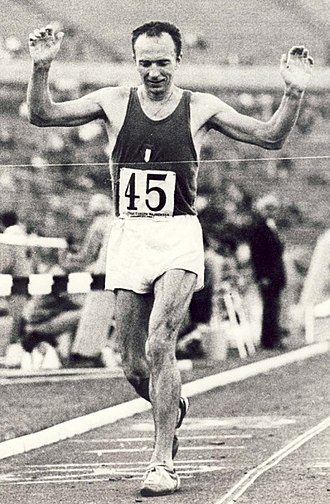
First, we are wishing Italian race walker Abdon Pamich a happy 93rd birthday as the oldest living Italian Olympic medalist! Pamich represented his country in five consecutive editions of the 50 kilometer race walk from 1956 through 1972. He won the event in 1964 and also took bronze in 1960, just missing a third medal by placing fourth in 1956. He also took the title at the Mediterranean Games in 1955, 1963, and 1971, as well as at the European Championships in 1962 and 1966, coming in second in 1958. He was a 40-time national champion across various distances and later worked as a sports psychologist and coach.
Next, we are wishing a happy 92nd birthday to José Manuel Quina, the oldest living Portuguese Olympic medalist! Quina and his brother Mário took silver in the Star class sailing tournament at the 1960 Rome Games and placed 17th in 1968. José Manuel also competed in the Finn class at the 1972 edition, where he placed 11th, and took part in several editions of the European championships. He continued to compete nationally until 2008.
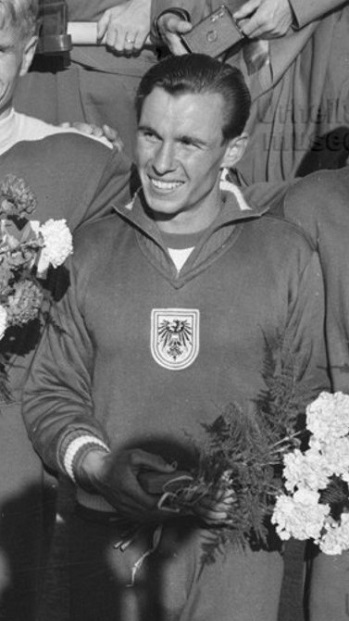
While we are on the topic of Olympic medalists, we want to mention an Olympic medal mystery that was on our list for a long time, before being solved recently by Connor Mah. Austrian canoer Herbert Wiedermann, born November 1, 1927, won bronze medals in the K-2 1000 event at the 1952 and 1956 Summer Olympics. As discovered by Mah, Wiedermann died May 6, 2014, at the age of 86.
Oldest Olympians is saddened to learn that Hans Andersson-Tvilling, born July 15, 1928, died earlier this month at the age of 98. Andersson-Tvilling won bronze for his country at the 1952 Oslo Games, and just missed a second medal in 1956 after Sweden lost the bronze medal match to Canada. He won the World Championships in 1953, also taking silver in in 1951, and captured European Championship titles in 1951 and 1953, in addition to bronze in 1955. Domestically, he was a four-time national Swedish champion with Djurgårdens IF. His twin brother Stig had a similar record in the sport, including the Olympic bronze.
At the time of his death, Andersson-Tvilling was the oldest living Olympic ice hockey medalist. That distinction now goes to American Rube Bjorkman, born February 27, 1929. Bjorkman also represented his country in the tournament at the 1952 Oslo Games, but was a silver medalist. He was also a reserve in 1948, but did not see any playing time, although he did compete at the 1955 World Championships. He later became known as a coach, particularly for the University of North Dakota Fighting Sioux.
Additionally, we want to thank the reader of our last blog post who showed that Soviet track athlete Boris Yefimov was still alive in 2017, and can therefore remain on the tables for a few more years. They also demonstrated that French skier Marguerite Leduc was still alive at least in 2023.
Last month, Oldest Olympians began covering those Olympians for whom we last had evidence of being alive from 2015 and will remove from our tables if we cannot find any additional evidence of their being alive. Today, we will cover the other half of our list.
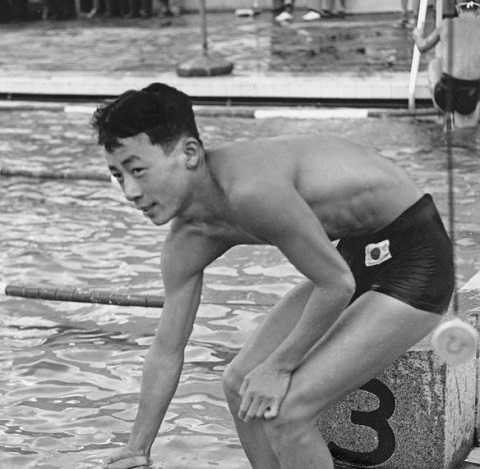
First we have Japanese swimmer Toru Goto, born June 26, 1934. Goto represented his country in two events at the 1952 Helsinki Games, winning silver as part of the 4×200 metres freestyle relay and coming in fourth in the 100 metres freestyle. In 1955 he set a world record in the 4×100 metres freestyle relay, and he later worked as a sports writer and administrator. We know that he was still alive in 2015, when he donated his medal to his high school, but perhaps due to the language barrier we have not seen an update since.
Next we have Dutch rower Peter Bakker, born August 4, 1934. Bakker represented his country in the double sculls at the 1960 Rome Games, where he placed fifth. He and his more well-known partner Co Rentmeester had won bronze in that event at the European Championships the previous year. We last had confirmation that he was alive in 2015, and while we suspect that this remains the case, his common name has made it difficult to find proof.
Then we have Japanese cross-country skier Hidezo Takahashi, born May 22, 1934. Takahashi represented his country in four events at the 1964 Innsbruck Games, finishing 10th with the relay and having a best overall finish of 35th in the 50 kilometers. The Japan Times contained a feature on him at the age of 80, but we have not seen anything similar for his 90th birthday.
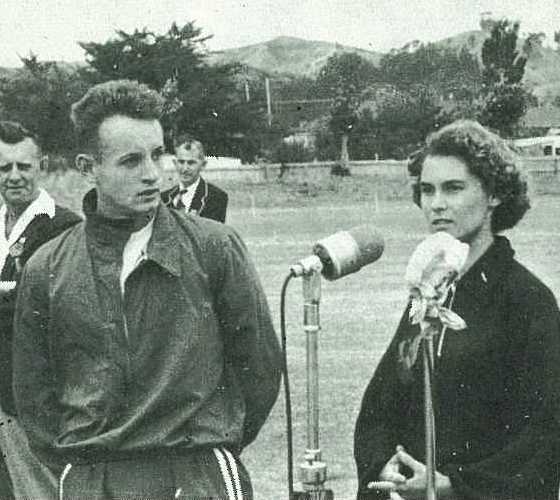
We also have Morrie Rae, born March 12, 1935, who represented New Zealand in the 100 and 200 metres track events at the 1956 Melbourne Games, being eliminated in the semi-finals of each. He also competed at the 1958 British Empire and Commonwealth Games, while domestically he was the 100 metres champion from 1954-1959 and the 200 metres titleholder from 1955-1959. Although our last update comes from 2015, he does not appear in the New Zealand Death Index, which makes us suspect that he is still alive.
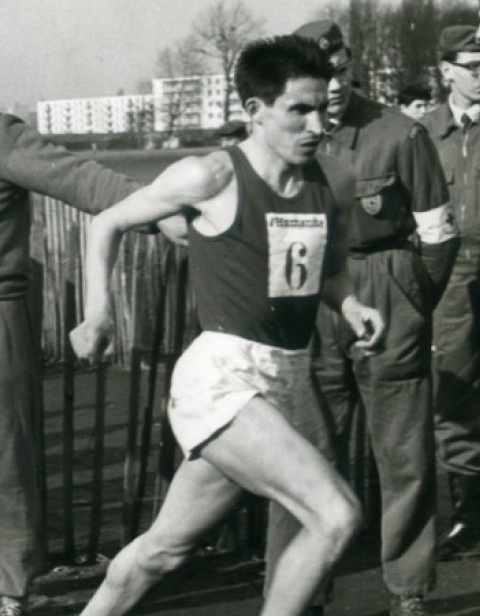
Next is Soviet track athlete Boris Yefimov, born April 4, 1935. Yefimov represented his country in the 5000 metres event at the 1960 Rome Games, where he was eliminated in round one. He continued to compete into the 1970s, but never again attended the Olympics. Our last evidence of his being alive comes from an article on his 80th birthday celebrations, and we have been unable to uncover more.
Finally, we have French alpine skier Marguerite Leduc, born October 31, 1935. Leduc represented her country in the downhill and the slalom at the 1960 Squaw Valley Games, placing 18th and 19th respectively. Her sisters Thérèse and Anne-Marie also competed at those Olympics, and we last heard from Marguerite on her 80th birthday. As we could not locate her in the French Death Index, it seems likely that she is still alive, but we do not have the proof.
That is what we have for this topic, but we hope that you will join us next time as we explore more facets of the Oldest Olympians!
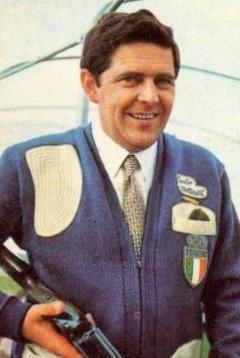
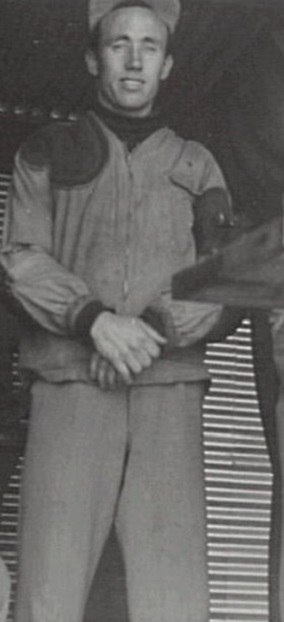
Oldest Olympians is saddened to learn that Italian sport shooter Ennio Mattarelli, born August 5, 1928, died August 23 at the age of 98. Mattarelli represented his country in the trap event at the 1964 and 1968 Summer Games, winning gold at the former and placing 27th at the latter. He was also a seven-time trap shooting medalist at the World Championships, three of which were gold. He later worked as a coach, in addition to designing rifles.
At the time of his death, Mattarelli was the oldest living Italian Olympic medalist and Olympic medalist in sport shooting. In terms of the former distinction, the new titleholder is Abdon Pamich, born October 3, 1933. Pamich represented his country in the 50 kilometers race walk at five consecutive editions of the Games, 1956-1972, winning bronze in 1960 and gold in 1964. He also competed in the 20 kilometers at the 1956 edition and was Mediterranean Champion three times (1955, 1963, 1971) and European Champion twice (1962, 1966) over 50 kilometers.
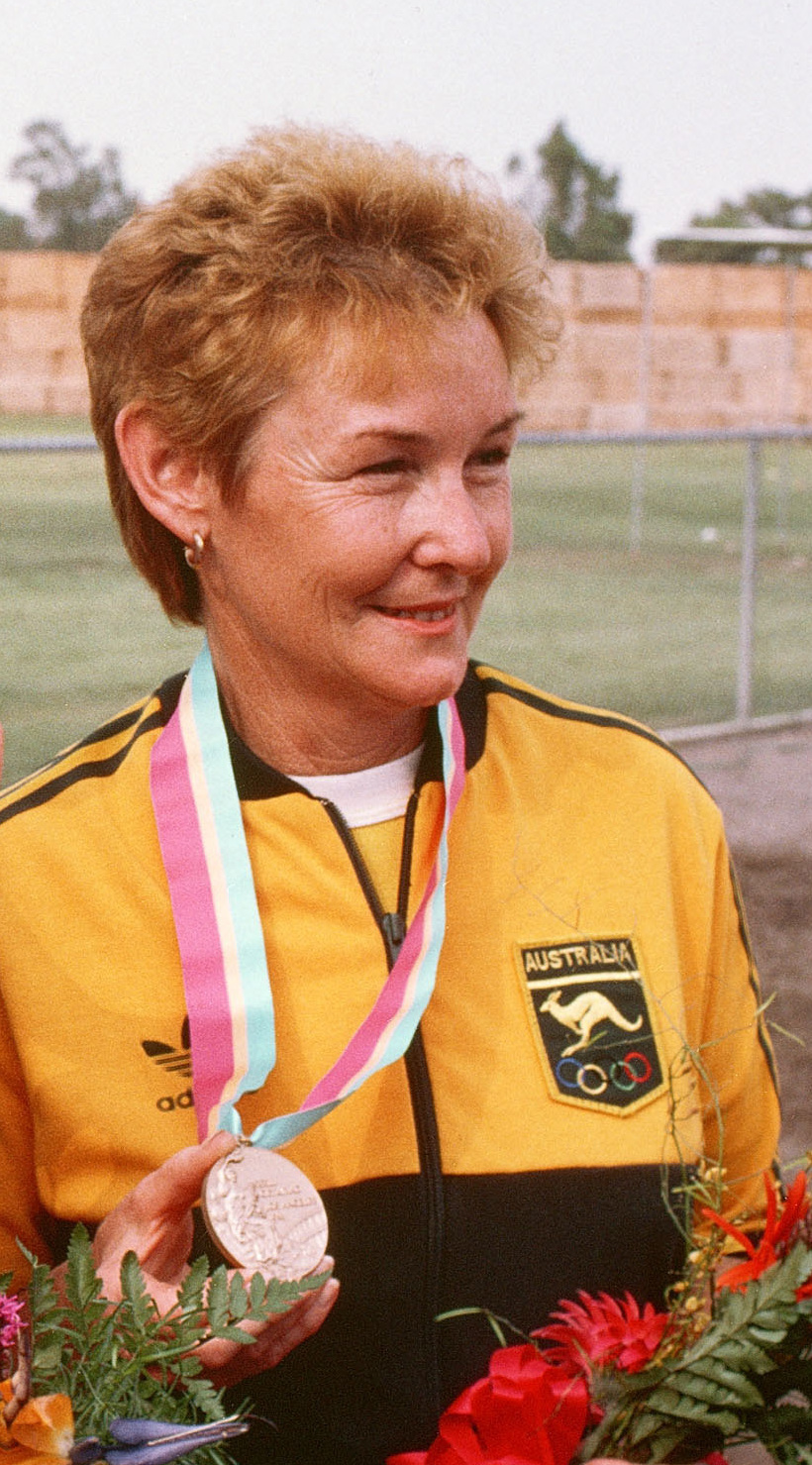
(Patricia Dench)
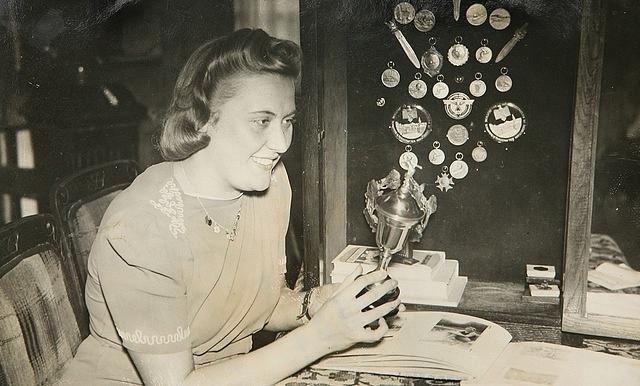
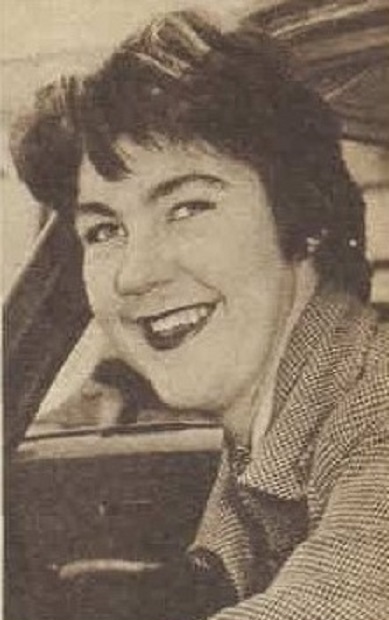
The new oldest living Olympic sport shooting medalist, meanwhile, is Patricia Dench, born March 8, 1932. Dench represented Australia in the sporting pistol, 25 metres event at the 1984 Los Angeles Games, where she took home bronze. She was also a four-time medalist at the World Championships, including a team gold from the 1979 edition. The oldest living Olympic champion in sport shooting, however, is Ragnar Skanåker, born June 8, 1934. Skanåker represented Sweden in 12 sport shooting events across seven consecutive editions of the Olympic Games, 1972-1996, winning four medals, including gold in the free pistol in his first attempt.
Finally, as an update, research into Lebanese newspaper archives has enabled us to identify a sport shooter about whom we know almost nothing: Salem Salam, who took part in the small-bore rifle, prone event at the 1948 London Games. We discovered that Salam worked for Middle East Airlines and was at one time its President, in addition to being a sportsman. He was born in 1922 and died November 11, 1999.
Today we have the same two milestone birthdays among the Oldest Olympians as last two years so, as is our tradition, we are combining them into a single blog post rather than choosing between them!
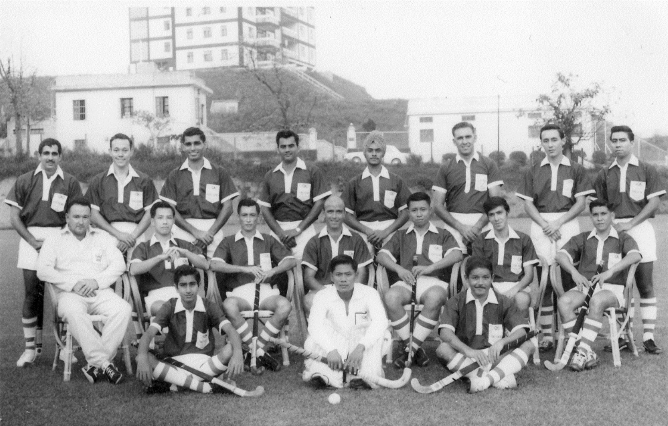
(The 1964 Hong Kong Olympic field hockey team, pictured at The Olympians)
First, we are wishing a happy 95th birthday to Lionel Guterres, the oldest living Olympian to have represented Hong Kong! Guterres was a member of Hong Kong’s field hockey delegation to the 1964 Tokyo Games, which finished last in its preliminary round pool and was eliminated. Guterres later emigrated to the United States and now lives in Vallejo, California.
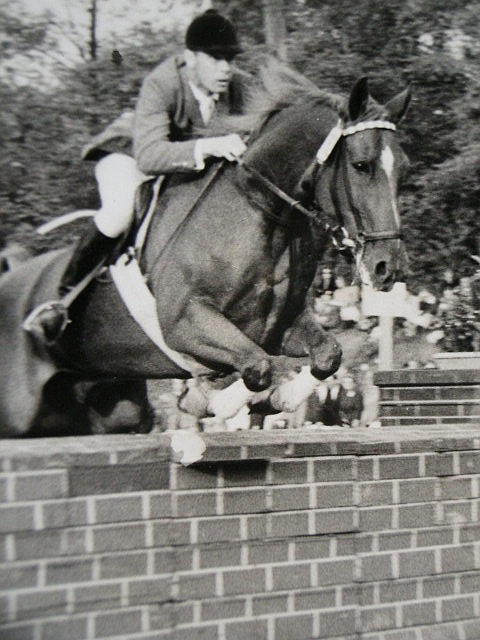
We also want to wish a happy 94th birthday to Otto Ammermann, the oldest living Olympian to have represented a West German team, rather than a unified one! He did so in the eventing tournament at the 1976 Montreal Games and, while he was disqualified individually, he won a silver medal with the team. He had also taken team silver at the World Championships the year before and was West German champion in 1969, 1978, and 1980.
Finally, thanks to a reader, we were able to confirm that Brazilian swimmer Aram Boghossian, born November 19, 1929, was still alive in 2019, so will not have to confirm his status against until he turns 100. He was also able to confirm that Malaysian sport shooter Edmund Yong, born July 3, 1936, did in fact die on July 9, 1997. That same reader also allowed us to add Irish equestrian Diana Willson, born March 12, 1934, back to our lists after uncovering evidence that she was still alive in 2026.
Today we have two milestone birthdays to celebrate so, as always, we are going to cover them both in a single blog post!
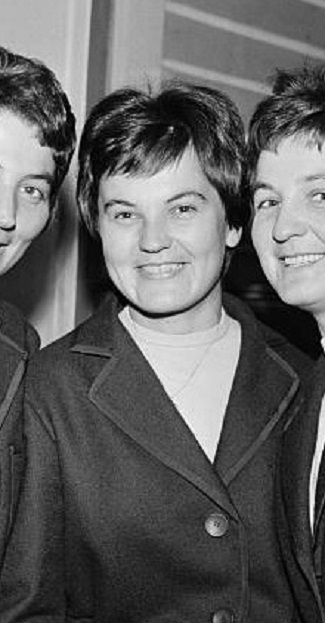
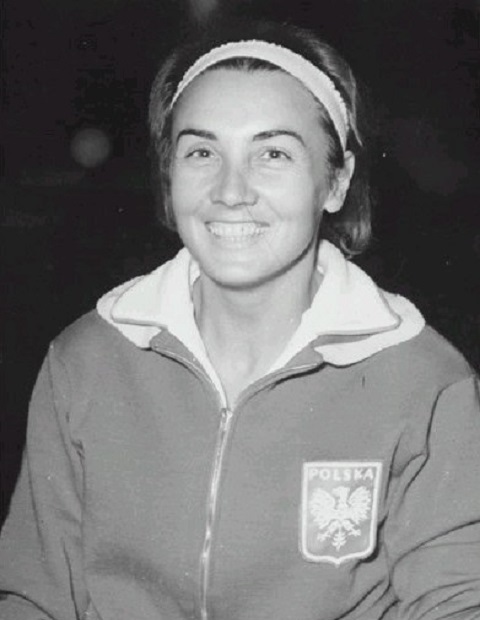
First, we are wishing a happy 94th birthday to Maria Golimowska, the oldest living Olympic volleyball medalist and Polish Olympic medalist! Golimowska represented Poland in the tournament at the 1964 Tokyo Games, where she won a bronze medal. She also took bronze at the 1956 and 1962 World Championships and the 1958 European Championships, in addition to silver at the 1963 Europeans. Her international career lasted from 1955 through 1966, and she did not retire domestically until 1971.
We are also wishing a happy 94th birthday to Leo Franciosi, the oldest living Sammarinese Olympian! Franciosi represented San Marino in four editions of the Olympic trap shooting tournament – 1960, 1968, 1976, 1980 – with a best finish of joint-21st in 1976. He was also the flagbearer for San Marino in the 1968 Opening Ceremony.
Finally, as an update to a previous post, Connor Mah discovered that German swimmer Erna Herbers, born May 2, 1925, died February 7, 2025 at the age of 99. She did not, therefore, become a centenarian.
Late last year and early this year, Oldest Olympians spent three blog entries covering those Olympians for whom we last had evidence of being alive from 2014 and would remove from our tables if we could not find any additional evidence of their being alive. Although we received updates on many of those names, several others have just been removed: Paul Laporte, Wilson Gomes, Gerry Ronan, Mitsuyuki Funamizu, Diana Willson, Robert Rey, and Pongummart Ummarttayakul. Moving on in the hopes of catching up, our list of individuals from whom we last heard in 2015 is 10 names long, and thus we will be covering them over two blog entries.
First we have Australian sport shooter Norman Rule, born January 28, 1928. Rule represented his country in five rifle events across three editions of the Games, 1956-1964, with a best finish of 22nd in the small-bore rifle, prone competitions in 1956 and 1964. We know that he had a lengthy career and later took up table tennis, which he was still playing through 2015. Since then, however, we have not had an update, although the Ryerson Index does not list any obituaries for him, and thus we suspect that he is still alive.
Then, for a second time on this blog, we have Aram Boghossian, born November 19, 1929. Boghossian represented Brazil in four swimming events across two editions of the Games, 1948 and 1952, but did not reach the podium in any of them. He did, however, win a silver medal as a member of the 4×200 metres freestyle relay at the 1951 Pan American Games. He continued to swim at the masters’ level and, by career, was an engineer. In our previous entry, we had last heard from him in 2012, but we were later provided a 2015 update. We have not, however, heard anything further.
Next we have Indian weightlifter Valli Asari Mookan, born in 1931. Mookan represented his country as a bantamweight at the 1956 Melbourne Games, where he placed 12th. This is all we know about him, but there was a government register that indicated that he was still alive in 2015.
Next there is Mexican archer Rafael Aveleyra, born July 29, 1932. Aveleyra represented his country in the individual event at the 1972 Munich Games, where he placed 51st. Born and educated in the United States, he later worked in the medical field in Mexico, with his Facebook page being last updated in 2015.
Finally we have Romanian track athlete Florica Grecescu, born August 31, 1932. Grecesu represented her country in the 800 metres event at the 1960 Rome Games, where she was eliminated in round one. One year later she won a silver medal in that event at the Summer Universiade, while she was ninth at the 1962 European Championships. We know that she was still alive in 2015, but have no details beyond that.
With half of the list taken care of, we will stop here, but we look forward to completing this entry in the near future! We hope that you will join us!
Today on Oldest Olympians we have the same two milestone birthdays to celebrate as last year, so we will once again cover them both in a blog entry!
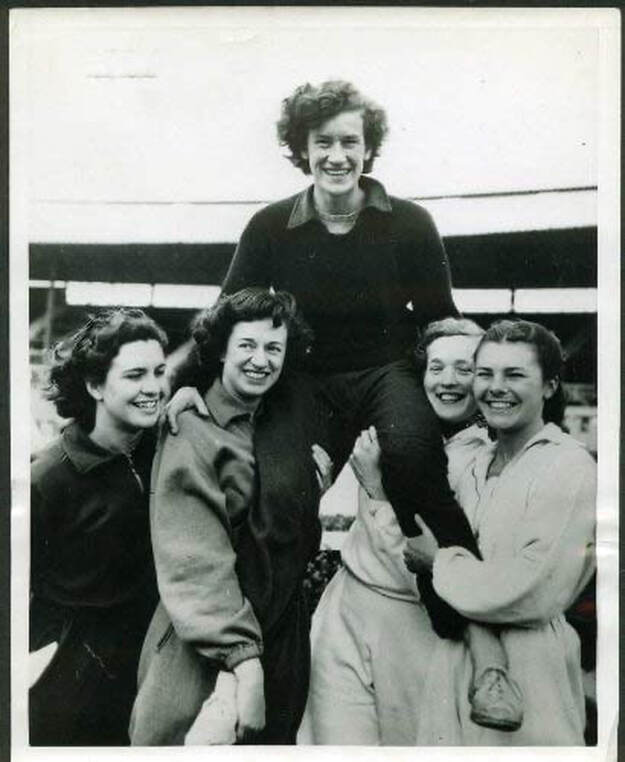
First we are wishing a happy 98th birthday to Sheila Lerwill, the oldest living British Olympic medalist and Olympic medalist in track and field athletics! Lerwill represented her country in the high jump at the 1952 Helsinki Games, where she won a silver medal. She was European champion in that event in 1950 and came in fourth at the 1954 British Empire and Commonwealth Games. After coming in fifth at that year’s Europeans, she retired from active competition.
Second, we are wishing a happy 97th birthday to Fritz Nachmann, the oldest living Olympic luger, survivor of the 1968 Grenoble Games, and German medalist! Nachmann represented West Germany in 1968 and won a bronze medal in the doubles while placing 17th in the singles. Four years earlier he had represented a unified Germany at the 1964 Innsbruck Olympics, but did not finish in the singles. He won silver in the singles at the 1967 Europeans and five medals, including three golds, at the Worlds.
Finally, we have an update on an Olympian that we featured previously as an Olympic mystery: Chilean track athlete Rodolfo Wagner. Wagner represented his country in the 100 metres event at the 1928 Amsterdam Olympics, where he was eliminated in round one. We knew little more about him than that but, thanks to Connor Mah, we have learned that he was born July 3, 1904 in Coquimbo and died in March 1984 in Santiago.
Today on Oldest Olympians, we are finalizing our look into new Olympic missing links. These are individuals for whom we have suggestions for a date or year of death, but for whom we cannot confirm the information through reliable sources. Today, we are looking into Olympians who were born in 1936, and we have six names in this category.
The first is Bulgarian gymnast Todor Bachvarov, born January 8, 1936. Bachvarov represented his country in the tournaments at the 1960 and 1964 Summer Olympics, placing 11th and 10th with the team respectively. Individually, his best finish was joint-42nd in the parallel bars in 1960. This is all that we know about him, except that someone added a year of death of 2021 to his Wikipedia page, but without a source.
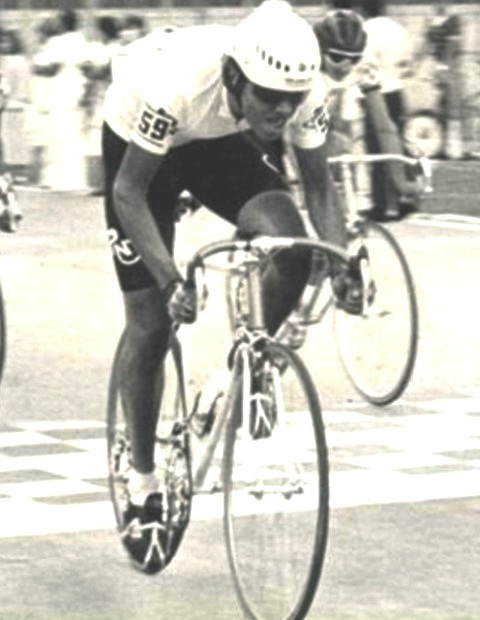
Next we have Mexican cyclist Luis Muciño, born April 24, 1936. Muciño represented his country in the sprint and tandem sprint events at the 1960 Rome Games, and was eliminated in the round one repêchage final and the round one repêchage respectively. His son César competed on the track at the 1992 Barcelona Olympics and died in an accident in 2003, but as for Luis, someone added a date of death of October 2, 2015 to his Wikipedia page, but again without a source.
Next we have Malaysian sport shooter Edmund Yong, born July 3, 1936. Yong represented his country in the skeet shooting event at the 1976 Montreal Games, where he placed 64th. He was better known for his achievements in golf, and he served as the Secretary-General of the Asia Pacific Golf Federation from 1977 to 1996. Someone added a date of death of July 9, 1997 to his Wikipedia page, yet again without a source.
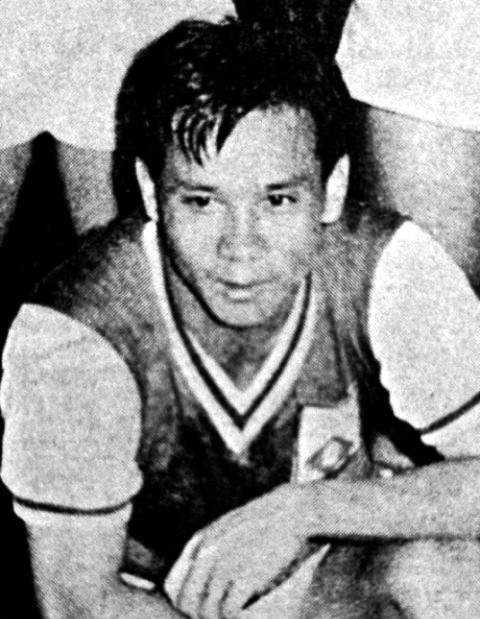
Then we have Wong Chi-Keung Taiwanese footballer, born July 8, 1936. Wong represented his country, competing as “Formosa”, at the 1960 Rome Games, where it was eliminated in the preliminary round. He had much better luck at the 1958 Asian Games, as he took home a gold medal, and he was third and fourth at the 1960 and 1968 Asian Cups respectively. Domestically, he won four national titles with the Asian All Stars (1965-68). We found a memorial for an individual by this name and year of birth who died October 27, 2010 and was buried in Hong Kong, but we could not verify that it was the footballer.
Up next is Australia track and field athlete Valerie Lawrence, born August 5, 1936. Lawrence represented her country in the shot put and discus throw at the 1956 Melbourne Games, placing 13th and 21st respectively. She was the Australian national champion in the shot put from 1952 through 1954. She later took the married name “Melville”, and while we found an obituary notice in the Ryerson Index for a Valerie Melville who died December 31, 2008 at the correct age, we could not obtain a copy to check if it was the Olympian.
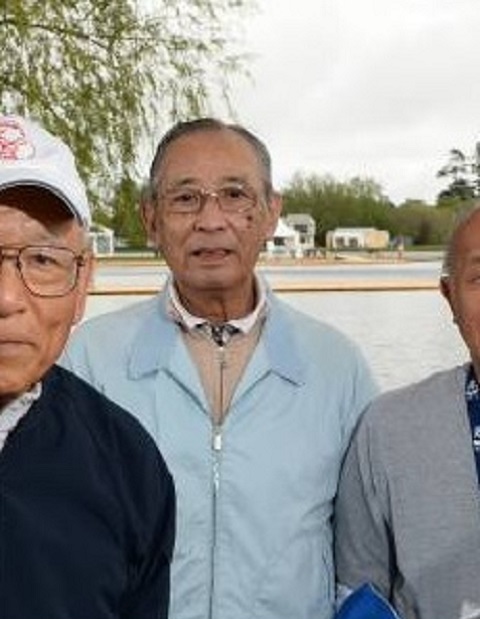
Finally, we have Japanese rower Yasukuni Watanabe, born October 22, 1936. Watanabe represented his country in the eights at the 1956 Melbourne Games and was eliminated in the semi-finals. We do know that he was alive recently, but we also uncovered an obituary of someone by this name who died January 7, 2024 at the correct age. Unfortunately, it did not contain information about an Olympic career. That is the conclusion of our recent Olympic mysteries series for now, but we hope that you will join us next time for a new topic!