Felix Würth and Lotte Haidegger

We have another quick post today on Oldest Olympians. Until recently, we listed Felix Würth, born August 11, 1923, as the oldest living Austrian Olympian. This was based on a report from late 2012 that listed him as alive and living in Ontario, Canada, but we had not seen an update since. Recently, however, we removed him from our tables on credible, albeit yet unproven, evidence that he may have died, and we wanted to dedicate a little space to explaining that decision.

First, a little background, as Würth was no marginal athlete. His domestic career in Austria began after World War II and, from 1947 through 1952, he won a total of 21 national titles: four in the 4×100 relay, four in the 4×400 relay, five in the long jump, six in the triple jump, and two in the decathlon. He competed in both the long and triple jump at the 1948 and 1952 Summer Olympics, and was eliminated in the first round of all events except the long jump in 1948, where he placed eighth. He also represented Austria at the 1950 European Championships, finishing 13th in the triple jump and being eliminated in the qualifications for the long jump.
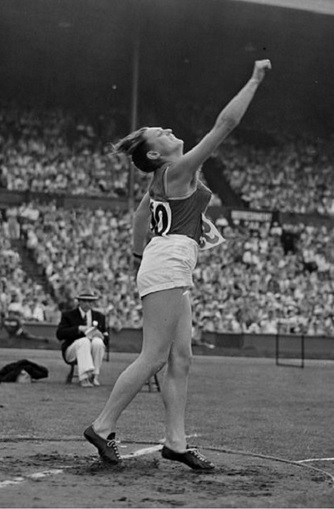
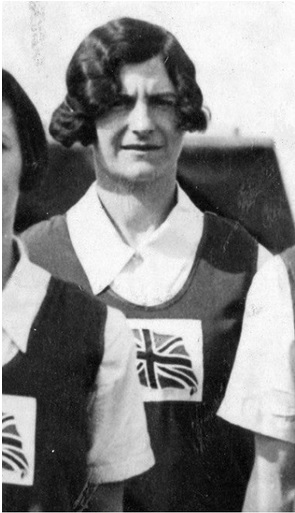
(Lotte Haidegger)

Würth married Lotte Haidegger, herself an accomplished track and field Olympian. She won Austrian titles in the shot put, discus throw (twice), and pentathlon, and was eighth in the discus at the 1950 European Championships. In both 1948 and 1952 she placed fifth in the Olympic discus tournament, and she was also entered in the shot put in 1952, although she did not start. After retiring from active competition, the couple eventually moved to Canada, and Haidegger was listed as deceased in the 2012 update on Würth.

This was the basis of our listing Würth as alive, although we also noted that a “Felix Wuerth” was listed as living in Guelph, Ontario at the same address as the retirement home that published the update. Public records, of course, may be slow to update, and recently an anonymous user on Wikipedia claimed that Würth died February 25, 2014. This user also noted that Haidegger died February 14, 2004 in Puslinch Township, Ontario. None of this information conflicts with what we know for certain but, unfortunately, even with such specific data we were unable to locate corresponding proof of these claims. We do, however, suspect that it is accurate, hence our removal of Würth from our lists. Until we uncover more evidence, however, this will remain a small Olympic mystery.

(Franz Zigon, pictured at the age of 94, at Nachrichten)

All of this means that the oldest known Austrian Olympian is now Franz Zigon, born March 9, 1924, who recently turned 97. Zigon represented his country in the water polo tournament at the 1952 Helsinki Games, where Austria was eliminated after the preliminary round. Unlike with Würth, we have much more documentation that Zigon is alive (and active in swimming!).
MULTI-SPORT olympians

A few days ago I posted about athletes who competed at both the Summer and Winter Olympics – very rare birds. But what about those athletes who have competed in 2 different sports at the Olympics, although not necessarily at the Summer and Winter Olympics? How often has that occurred.

Here we must be careful in discussing sports and disciplines. The IOC recognizes both sports and disciplines, with disciplines being considered a sub-group within a sport. The best examples are swimming, diving, water polo, and artistic swimming (formerly synchronized swimming), which the IOC considers disciplines within the sport of aquatics; and skiing, with separate disciplines labelled cross-country skiing, Alpine skiing, Nordic combined, ski jumping, and snowboarding. There are several other sports that also have separate disciplines under their purview.

We basically consider disciplines as separate sports in the cases above and a few other cases, such as volleyball and beach volleyball. So, when athletes compete in two or more “sports” at the Olympics, it becomes important to classify them either as 1) related sports, or 2) distinctly different sports (DDS). DDS are not necessarily those that the IOC labels as separate sports. We consider fencing and modern pentathlon, swimming and triathlon, or biathlon and cross-country skiing to be related sports, among others, since the action of one is included in the other sport.

Now, given that primer, there have been 1,004 Olympians compete in 2 different sports at the Olympics, by our definitions. Of these 360 competed in DDS. Of the 1,004, 77 athletes have actually competed in 3 different sports at the Olympics, and 6 athletes appeared in 4 different sports.

Of the 6 athletes competing in 4 different sports, only 3 could be considered to have competed in DDS, and all of those were in 1896. Carl Schuhmann (GER) competed in athletics, gymnastics, weightlifting, and wrestling, as did Launceston Elliott (GBR); while Viggo Jensen (DEN) appeared in athletics, gymnastics, shooting, and weightlifting.

Of the 77 athletes competing in 3 different sports, only 16 athletes can be considered to have appeared in DDS. These were all men and the last time it happened was in 1928, when Philippe Van Volcksom competed in ice hockey, rowing, and speed skating, although I guess one could argue that speed skating and ice hockey have some features in common.

What are the sports that most commonly doubled up? There have been 186 different combinations of multi-sport participation at the Olympics. Looking at all sports, including related sports, here are the most common:

Sports###
Swimming/Water Polo154
Biathlon/Cross-Country Skiing93
Cross-Country Skiing/Nordic Combined87
Nordic Combined/Ski Jumping57
Athletics/Bobsledding49
Fencing/Modern Pentathlon49
Cross-Country Skiing/Nordic Combined/Ski Jumping31
Athletics/Gymnastics25
Athletics/Tug-of-War25
Diving/Swimming20
Beach Volleyball/Volleyball19
Cycling/Speedskating17
Bobsledding/Luge12
Alpine Skiing/Cross-Country Skiing10
Speedskating/Short-Track Speedskating10

No surprise there with swimming and water polo leading the way, but if you look at that list, we would only classify ATH/BOB, ATH/GYM, and ATH/TOW as DDS. Here is what the list looks like, if we limit ourselves to the DDS only:

Sports###
Athletics/Bobsledding49
Athletics/Gymnastics25
Athletics/Tug-of-War25
Cycling/Speedskating17
Athletics/Weightlifting9
Cross-Country Skiing/Cycling8
Diving/Gymnastics8
Tug-of-War/Wrestling7
Athletics/Basketball6
Fencing/Shooting6
Rowing/Sailing6
Athletics/Cross-Country Skiing5
Athletics/Hockey5
Tug-of-War/Weightlifting5

Have any of these athletes actually won medals in 2 or more different sports? Yes, of course they have. It has happened 86 times at the Olympics, with 33 of those occurring in DDS.

Unique among these athletes is Franz Kugler, who won medals in 3 different sports. He is often listed as Frank Kungler in earlier sources, including ours, although we have now discovered his full, correct name and vital dates. Kugler was a German when he competed at the Olympics in 1904, although he is listed by the IOC as from the USA because he represented the St. Louis Southwest Turnverein. He is the only Olympian to win medals in 3 Olympic sports. He won a silver medal in heavyweight wrestling, 2 bronze medals in weightlifting, and a bronze medal in tug-of-war in 1904. Kugler became a US citizen in 1913 and died in St. Louis in 1952.

What about winning gold medals in 2 different sports? Yeah, that’s happened, too, actually 15 times with 4 athletes doing it in DDS. There were 2 women, Anfisa Reztsova (EUN/RUS/URS) who not only did it in biathlon and cross-country skiing, but while representing 2 different NOCs; and Esther Ledecka (SVK) who famously did it in 2018 in Alpine skiing and snowboarding, but both of those were in related sports.

The 4 athletes to win gold medals in DDS were as follows:

NameSport1-Year(s)Sport2-Year
Eddie Eagan (USA)BOX-1920BOB-1932
Carl Schuhmann (GER)GYM-1896WRE-1896
Daniel Norling (SWE)GYM-1908/12EQU-1920
Morris Kirksey (USA)ATH-1920RUG-1920

And there you have it.

Mystery 1948 Olympic Competitors

Two posts ago, when we discussed the French gymnast known only as “F. Vailee”, we noted that there were several other competitors from the 1948 London Olympics for whom we lacked even a full name. This was a more common phenomenon in the prewar era, when records were not kept as well and participants could take part having had limited success even in their home countries. By 1948, however, the Games had been firmly established as one of the pinnacles of international sporting competition.

It is true that newer nations, or at least those that had not participated previously, were beginning to take part, but all five of the individuals we are covering today were from countries that had at least one previous appearance at the Games. Thus, while we may not know a lot about the starting competitors from some non-European and non-American countries, we at least have a full name for almost all of them.

The first exception is that of G. M. Jagi, who represented Afghanistan in the field hockey tournament in 1948. Afghanistan had sent two track and field athletes, as well as a hockey team, to the 1936 Berlin Olympics and returned to the Games after the war with both a hockey and a football squad. While their footballers were eliminated in the qualifying round, the field hockey team fared slightly better, winning, losing, and tying one game to place joint-seventh among 13 teams overall. Despite knowing very little about the delegation in general, Jagi remains the only starting player from either team for whom we lack even a full name.

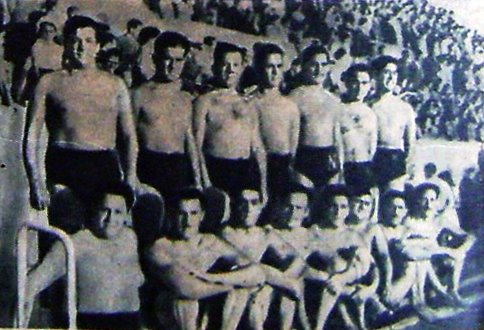
(The 1945 national water polo team of Chile, seated, pictured at Water Polo Legends)

The other non-European is A. Hurtado Vargas, who was a member of the Chilean water polo team that was eliminated in the group stage in 1948. Connor Mah has suggested that this individual may be César Augusto Hurtado Vargas, who died in 2007, but we have been unable to confirm this for certain.

The other three are all French sport shooters, which may be due to the lack of widespread media coverage given to the sport. For one, R. Gauthier-Lafond, who placed 20th in the small-bore rifle, prone, 50 metres event, we have a small hint that he may be French-Tunisian Georges Henry Gauthier-Lafond, who was active in the sport in the 1930s. He was born on October 16, 1914 and lived in Zriba, where his son Guy was born, and died September 30, 1992 in Auch. We have not been able to link him conclusively, however, to the Olympian. For the other two, R. Bouillet who finished 32nd in the rapid-fire pistol, 25 metres, and R. Stéphan, who was 48th in the free pistol, 50 metres, their names are common enough that we have encountered difficulty in locating any clues.

That is what we have for today – given the subject matter, we did not have much to say on the actual competitors, but we hope that there is still some interest in the topic nonetheless. As always, we hope to see you in the future for another blog post!

The 1928 Mexican Winter Olympic Bobsleigh Team, Part II

Today on Oldest Olympians we have an exciting update to a story that we covered recently on this blog. Two posts ago, we shared what little we knew of the tale of the Mexican bobsleigh team at the 1928 St. Moritz Olympics. At the conclusion, we noted that the full identities of three of the five competitors remained a mystery.

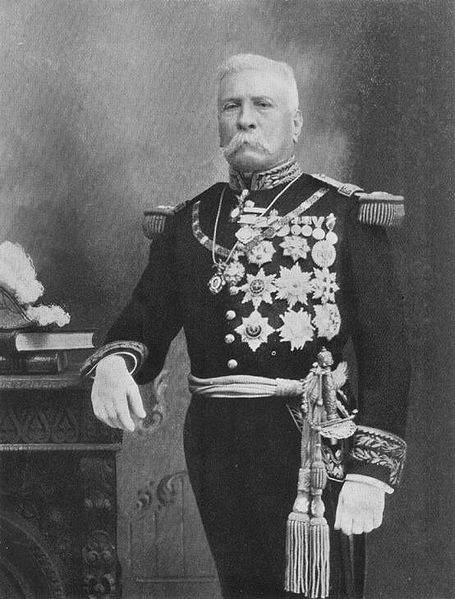
(Porfirio Díaz)

Shortly thereafter, Carlos Hernandez forwarded us some fascinating information: the entire team was composed of the close circle of Mexican president Porfirio Díaz, who had been ousted from power and sent to exile in Paris in 1911, where he died a few years later. G. and J. Díaz, therefore, were close relatives of this famous politician! Based on this evidence, and with a little help from Hilary Evans and Connor Mah on the finer details, we were able to identify these men as Porfirio’s grandsons: Genaro Díaz Raigosa and José de la Cruz Porfirio Genaro Díaz Raigosa. Both were born in Mexico City; Genaro on April 19, 1904 and José on April 29, 1907. Genaro eventually returned to Mexico and died there on December 5, 1963. José died sometime in 1988, but we have been unable to ascertain further details.

(Manuel Escandón)

As for the final competitor, Juan de Landa, we were told that his full surname included either y Escandón (from Carlos Hernandez) or Osio (from Fernando Arrechea). While we have been unable to find an exact match for either, we suspect that he may actually have been José Manuel “Pepe” de Landa y Osio, born May 28, 1899 in Tlalpan and died March 6, 1961 in Mexico City, who was the son of Guillermo de Landa y Escandón. We have, however, been unable to confirm this. This would, however, make him related to the Escandón brothers, Manuel, Pablo, and Eustaquio, who won a bronze medal for Mexico in the polo competition at the 1900 Paris Olympics.

There is certainly a much larger story to tell here, but for now this is all that we have. In terms of updates, we also wanted to thank Gérard Lefebvre, who confirmed that two-time French water polo Olympian Maurice Lefèbvre was born on October 30, 1913 in Tourcoing and died there on May 24, 1983. We will be bringing you something new shortly so, as always, we hope that you will join us!

olympians competing in BOTH Seasons

Seiko Hashimoto was recently named as the new President of the Organizing Committee for the 2021 Tokyo Olympic Games. Ms. Hashimoto competed in the Olympics in both cycling and speed skating, as I noted in some tweets on the day she was announced as President. I’ve had several people ask me about athletes competing in both the Summer and Winter Olympics and how rare that is, which has prompted me to prepare this blog on “Both Season Olympians (BSOs)”. And as you will see, Ms Hashimoto’s name will figure prominently in the following.

It’s very rare to be an Olympic athlete. Since 1896 there have been about 135,400 Olympic athletes to compete in the Summer and Winter Olympics. By looking at historical populations and birth rates (see OurWorldInData.org), one can estimate that since 1870 through 2000, the period during which most of these athletes had to have been born, there have been about 12,600,000,000 births in the world, or between 12 and 13 billion. That means the chance of any person born in this period becoming an Olympic athlete is about 0.001% – 1/1000th of 1 percent.

How many of these 135,400 Olympians have competed at both the Summer and Winter Olympics, as did Ms. Hashimoto? There have been exactly 142 Olympians to compete at both Olympic Games through 2018, or about 0.1% of all Olympians, meaning the chance of any person born between 1870-2000 has had a 0.000001% chance of competing at both Olympic Games.

Who are these 142 extraordinary Olympians? They have come from 41 different nations, with the following nations having the most BSOs.

Belgium12
Canada12
Hungary12
Austria10
United States10
Norway8
Finland6
Great Britain6
Netherlands6
Switzerland6

Which sports have they doubled in? To date, 8 Olympians, 2 women and 6 men, have competed in 3 different sports/disciplines at the Winter and Summer Olympics, as follows:

NameGenderNOC(s)SportsYear(s)
Jaqueline MourãoFBRABIA/CCS/CYC2004-2018
Georgia SimmerlingFCANASK/CYC/FRS2010-2016
István DévánMHUNATH/CCS/NCO1912-1924
Erik ElmsäterMSWEATH/CCS/NCO1948-1952
Aleksandar MilenkovićMIOA/SCG/YUGBIA/CCS/CYC1992-2006
Béla SzepesMHUNATH/CCS/NCO1924-1928
Philippe Van VolckxsomMBELICH/ROW/SSK1920-1928
Willi ZachariasMROUASK/CCS/HAN1936

Note that Willi Zacharias did this all in 1936. Until 1992 it was possible for Olympians to compete in the Summer and Winter Olympics in the same year, as the Games were not separated until the 1994 Lillehammer Winter Olympics.

So in which sports should you specialize if you wish to compete in both editions of the Olympics? There have been 50 different combinations of sports among these 142 BSOs. The most common combinations are in the table below:

Sports###
Athletics/Bobsledding49
Cycling/Speedskating17
Cross-Country Skiing/Cycling8
Hockey/Ice Hockey7
Athletics/Cross-Country Skiing5
Football/Ice Hockey4
Athletics/Cross-Country Skiing/Nordic Combined3
Biathlon/Cross-Country Skiing/Cycling2
Bobsledding/Equestrian Events2
Bobsledding/Hockey2
Bobsledding/Rowing2
Cycling/Short-Track Speedskating2
Ice Hockey/Sailing2

This is now well-known, as bobsledders are often recruited from track & field athletes, but it was not always so. Johann Baptist Gudenus (AUT) did it in 1932, but it was not until 1968 that it occurred again, when Britain’s Colin Campbell and Switzerland’s Eddy Hubacher first competed, and eventually appeared at both Games in athletics and boblsedding. However, it did not become commonplace until the 1980s.

I mentioned that prior to 1994 Olympians could compete in the Summer and Winter Olympics in the same year. Was that a frequent occurrence? It actually happened 39 times, and 2 athletes did it in 2 separate years – Charles Stoffel (LUX) competed in bobsledding and equestrian, quite the unusual combination, in both 1924 and 1928; and the ubiquitous Seiko Hashimoto competed in cycling and speed skating in both 1988 and 1992.

How many BSOs have competed in the Summer and Winter Olympics more than once each? This has only been done 10 times, by 4 women and 6 men, led by the redoubtable Seiko Hashimoto, who competed at the Summer Games three times (1988/1992/1996) and the Winter Games four times (1984/1988/1992/1994), for a total of 7 appearances, the most ever by this group of 142 BSOs. The only other Olympian to compete at the Summer and Winter Olympics 3 times each is Canadian cyclist/speed skater Clara Hughes.

What about winning a medal at both the Winter and Summer Olympics – has this been done? Yes, it has, and 5 times, by the following athletes:

NameGdrNOCSport1SummerSport2Winter
Eddie EaganMUSABOX1920BOB1932
Jacob Tullin ThamsMNORSAI1936SKJ1924
Christa Rothenburger-LudingFGDRCYC1988SSK1984/88/92
Clara HughesFCANCYC1996SSK2002/06/10
Lauryn WilliamsFUSAATH2004/12BOB2014

Of these, there were 2 men and 3 women, although a man has not done it since Jacob Tullin Thams in 1936. Of the above, only Eddie Eagan won gold medals at both the Summer and Winter Olympics. Seiko Hashimoto does not make this list but she did win 1 Olympic medal, a bronze in the 1,500 metres speed skating at Albertville in 1992.

And there you have it.

F. Vailee

We have a quick post today for the Oldest Olympians blog, concerning the French gymnastics team at the 1948 London Games. When considering Olympic mysteries, we usually run into cases that come from before World War II, when the proceedings and competitors were often less well-documented. Today, however, we are going to look into the case of the 1948 competitor listed on Olympedia as “F. Vailee”.

(A picture of the 1948 French Olympic women’s gymnastics team, from Journal Le Petit Corse)

There was only a single gymnastics event for women contested at the 1948 London Olympics: the team all-around. France finished 10th out of the 11 teams, with only the Belgians faring worse. The competitor known as “F. Vailee” was one of the more successful members of the squad, yet she remains the only one about whom we know nothing. In fact, it seems that even what very little we have on her name is likely incorrect.

Research into French archives by Connor Mah has indicated that she was from Louveciennes and was active nationally from around 1947 through 1951, also representing her country internationally in 1949 in Italy. Her surname is given as Valle, Delle Valle, and Vallée, which was apparently her maiden name, although we do not have any clues regarding her age. The best candidate that he was able to uncover was a Carole or Caroline Della Valle of Belfort who was active in the sport in 1943, but this is far from a certain candidate. It does, however, raise the possibility that she was either foreign-born or born to a recently-immigrated family in France.

And that is really all we have. It seems unusual to have a postwar competitor whose very name eludes is, but she is not even the only French Olympian from 1948 where we lack this basic information. Perhaps we will cover some of the other nameless competitors in a future post but, whatever we bring you next, we hope that you will join us again!

The 1928 Mexican Winter Olympic Bobsleigh Team

Today on Oldest Olympians we wanted to share a piece of Olympic history that most people are probably unaware of. Many might be surprised to hear that Mexico, not a particularly wintery nation, has appeared at six editions of the Winter Olympics, with the most recent having been in 2010. Those who are familiar with this fact, however, may still be unaware that the country’s first participation at the Winter Games came in 1928, when it sent five men to compete in the bobsleigh event. While this appearance is fascinating in and of itself, it also contains an element of Olympic mystery that we like to showcase on this blog.

(The 1928 two-man bobsleigh event, from a photograph posted on Reddit)

The event allowed teams to be composed of either four or five men, but everyone entered five-men teams to avoid being at a disadvantage. It was postponed from its originally scheduled date and then limited to two runs due to poor weather. Of the 25 teams entered into the four/five man bobsleigh at the 1928 St. Moritz Games, Mexico placed 11th overall, coming in 16th in the first run and 8th in the second. This put it ahead of teams from more traditional winter nations, such as Switzerland, Poland, and Austria.

Given the nature of bobsledding during this era, it is not surprising that the two competitors that we do have some information about were members of higher society. Mario Casasús was a military officer who had connections to the world of finance and had an affair with the wife of American philanthropist Frank Jay Gould. Similarly, Lorenzo Elízaga was an aristocrat and property owner with a residence in Paris who later married an actress and died in Spain in 1996.

The other three competitors are more mysterious. We have a full name for only one of them – Juan de Landa – with the other two known only as G. and J. Díaz. As one might expect, nothing has yet been found about these individuals, so the question remains: who were the men who helped Mexico make their Winter Olympic début over 90 years ago? We suspect that the story could be found in Mexican archival material, but we have yet to comes across anything that might shed more light. Mexico did intend to send another team to the 1932 Lake Placid Games, but they did not compete, so we are left to wonder if perhaps some of the prospective team members intended to repeat their appearance from the 1928 edition.

We wanted to post today not only to share this interesting, if brief, story, but also to publicize it in the hopes that perhaps someone reading this might be able to provide more information. We will continue to write up Olympic mysteries here at Olympstats in the coming days and we hope that will you will continue to join us!

1928 British Gymnasts

Today on Oldest Olympians we wanted to look at the British delegation to the 1928 Amsterdam Games. There are many gaps in our knowledge of those who competed at this edition, but we wanted to focus in on the gymnasts, as there are two in particular that have eluded efforts to track down the details of their later lives.

As a member of the Northampton Polytechnic Institute, Doris Woods represented Great Britain as part of the first national women’s gymnastics team and helped them place third in the all-around in 1928. She later took to judging gymnastics competitions, but aside from the fact that she remained unmarried as late as 1939 (and thus retained her surname) and that she may also have been a member of London’s Ibis Club, we know nothing about her. Given the lack of clues in contemporary reports and even the uncertainty about her surname (which is sometimes listed as “Wood”), the best we can say is that she is almost certainly deceased, but otherwise remains an Olympic mystery.

On the men’s side, T. B. Parkinson was a member of the British team that placed 11th and last at the Amsterdam Games. Individually, he had a best finish of joint-65th on the horizontal bars. Unlike Woods, we know much about Parkinson’s gymnastics career, including that he did not take up the sport until he was 18 and that he was British national champion in the team all-around in 1933, 1934, and 1936 with the Bolton Lads. The one critical detail that escapes us, however, is his full name, which might provide additional clues as to his birth and death. Research by Connor Mah and Rob Gilmore has suggested that he may have been Thomas Buchanan Parkinson of Bolton, born February 4, 1905 and died November 29, 1965, but thus far no one has been able to confirm this.

Thus we have another short blog entry today, but we will be back soon with more Olympic mysteries. We hope that you will join us!

Stéphane de la Rochefoucault

Just to move in a different direction, today on Oldest Olympians we wanted to feature a short and completely random Olympic mystery. Long ago, we featured the case of the 1900 French fencer Viscount de Lastic, an individual who should have been easy to identify, yet remains unknown. He is not, however, the only member of the French nobility for whom we are missing information.

The 1928 St. Moritz bobsleighing events are among the poorest documented in terms of the biographical details of the competitors, and we are missing even the full names of two of the Mexican competitors, G. and J. Díaz (in fact, that whole team is probably worth its own Olympic Mysteries blog post). One would assume, however, that the competitor known as Stéphane, Viscount de la Rochefoucault would be at least well-known enough to have a few details for. After all, we have full life stories for two of his teammates and full birth information for a third, leaving only Jacques N. Rheins as a mystery. Even for Rheins, however, we know that he was a World Championship bronze medalist in 1934.

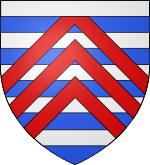
(Coat of arms of the Maison de La Rochefoucauld)

About Rochefoucault, however, we know nothing for certain. Searching for a “Vicomte de la Rochefoucault” by the name of Stéphane yields few relevant results, save for repeated suggestions to search for the house of “de la Rochefoucauld”. This inquiry is slightly more fruitful, but leads to no viable candidates for the Olympian on the surface.

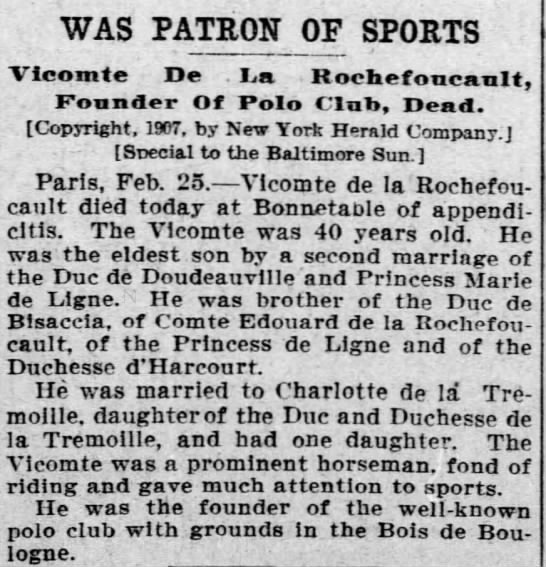
(Obituary for the Vicomte de la Rochefocault in The Baltimore Sun, February 26, 1907, pg. 11)

Searching through newspaper archives was immediately more successful, as we located the obituary of a sports patron by the name of Vicomte de la Rochefocault, who died February 25, 1907 at the age of 44. Of course, this could not be the Olympian from 1928, but it did provide a lot of family details to work with, as his full name was Charles Marie de La Rochefoucauld. Yet still, there was no Stéphane to be found in the family tree.

(Sosthène de La Rochefoucauld pictured at Genanet)

Charles Marie did, however, have a nephew by the name of Sosthène III, who participated several times in the early 24 Hours of Le Mans automobile race, a sport that often intersects with those who take part in bobsleigh. Sosthène was born June 20, 1897, making him a reasonable 31 in 1928, a year in which he was also titled the Vicomte de Rochefoucauld.

It seems almost certain, therefore, that Sosthène was the Olympic bobsledder, but, unfortunately, we were unable to locate a smoking gun. Sosthène died October 20, 1970, so if it was him, he was never among the oldest Olympians. Nonetheless, we hope that you enjoyed this brief foray into the world of exploring unknown Olympians.

Post-World War II Olympic Mysteries

Today on Oldest Olympians we are concluding our look at Irish Olympians who were born before 1931 for whom we lack either a date of death or confirmation that they are still alive. We have just three more competitors to cover, all of whom took part in the Games after World War II. Although this means that they could, in theory, still be alive, we believe that it is most likely that are all deceased.

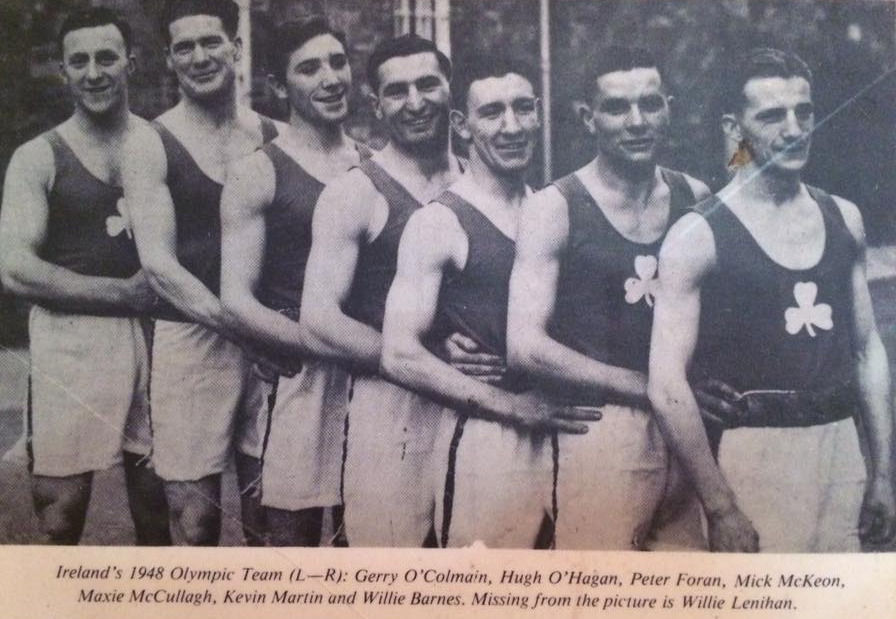
Peter Foran – Member of the Irish boxing delegation to the 1948 London Olympics

Peter Foran, born in 1927, was a member of an Irish boxing family and won his first junior title as a welterweight in 1946. In 1948 he captured the senior title and was therefore selected to represent his country in the Olympic tournament, ultimately losing to upcoming bronze medalist Hank Herring of the United States in the second round. He later worked in the radio and television industry and while we know of an Irish obituary for a Peter Foran who died on July 28, 2007, we have yet to connect it conclusively to the Olympian.

Tom Smith – Member of the Irish fencing delegation to the 1948 London Olympics

Tom Smith was active in fencing from 1943 through 1956, but the highlight of his career came when he was selected to represented Ireland in the foil competitions at the 1948 London Games. There, he was eliminated in the first rounds of both the individual and team tournaments. As one might imagine, his fairly common name has been an obstacle to finding anything more about him and while it seems likely that he is deceased given his active years, it is possible that he is still alive.

Harry Byrne – Member of Ireland’s sailing delegation to the 1972 Munich Olympics

Harry Bryne, born July 2, 1929, represented Ireland in Dragon class sailing at the 1972 Munich Games, where the nation placed 16th among 23 teams overall. We do not know much else about him, although we are led to believe that he is the individual listed in this obituary, who died July 4, 2019. Unfortunately, we have been unable to confirm this fact.

That concludes our posts on Irish Olympic mysteries! We did want to update one of the Canadian cases: Connor Mah was able to confirm that Canadian sport shooter Donald Sanderlin was indeed born in 1933, but sadly died in 2013. We also have a correction from Diego Rossetti, who informed us that Italian gymnast Silvio Brivio died in 2010, not 2011. As always, we greatly appreciate such contributions. Looking forwards, we will be bringing you a new topic in the coming days and we hope that you will join us!

All the Olympic Stats You'll Ever Need