Category Archives: Uncategorized

The Vuarnet and Bonlieu Families

Metal Skis, Bar Fights, Cults, Suicides, and Sunglasses

[table]

Category,Data

Full Name,Jean Raoul Célina André Vuarnet

Used Name,Jean Vuarnet

Born,18 January 1938; Bardo (TUN)

Affiliations,Skiclub de Morzine

[/table]

[table]

Year-Season,Sport,Event,Finish,Medal

1960 Winter,Alpine Skiing,Downhill,1,Gold

[/table]

[table]

Category,Data

Full name,François Bonlieu

Born,21 March 1937; Juvincourt-et-Damary; Aisne (FRA)

Died,18 August 1973; Cannes; Alpes-Maritimes (FRA)

Affiliations,CR Mont Blanc

[/table]

[table]

Year-Season,Sport,Event,Finish,Medal

1956 Winter,Alpine Skiing,Giant Slalom,9,

1960 Winter,Alpine Skiing,Giant Slalom,11,

,,Slalom,DQ Run 2/2,

1964 Winter,Alpine Skiing,Downhill,15,

,,Giant Slalom,1,Gold

,,Slalom,DQ Run 1/2,

[/table]

[table]

Category,Data

Full Name,Marie Edith Bonlieu (-Vuarnet)

Used Name,Edith Bonlieu

Born,18 September 1934

Died,22 December 1995; Vercors; Isère (FRA)

[/table]

[table]

Year-Season,Sport,Event,Finish,Medal

1956 Winter,Alpine Skiing,Downhill,DNF,

[/table]

The Vuarnet family has known the best of times and the worst of times. Jean Vuarnet first featured internationally when he won a bronze medal in the downhill at the 1958 World Championships. He was a pioneer downhiller, as he was really the first to use a deep tucked position, emphasizing its aerodynamic advantages. In 1960, he used the position to win the gold medal in the downhill at Squaw Valley, the only Olympic event in which he competed. Vuarnet also skied that year on Rossignol metal skis, and was the first skier to win a major championship using metal skis.

Jean Vuarnet

After the Olympics, Vuarnet endorsed a brand of sunglasses that took his name, and Vuarnet Sunglasses later became among the world’s most popular brands. He also spent time as a sports administrator with the French Skiing Association from 1962-71.

In 1958, Vuarnet had married Edith Bonlieu, who competed at the 1956 Olympics. Her brother was François Bonlieu, who had a much more extensive Olympic ski career than either his sister or Vuarnet. François Bonlieu competed at the 1956, 1960 and 1964 Winter Olympics, competing in 6 events and winning the gold medal in giant slalom at the 1964 Innsbruck Olympics.

François Bonlieu became a member of the French ski team when he was only 15 years old. In 1954, when only 17, he won a silver medal in the giant slalom at the World Championships in Aare. In 1958, Bonlieu added a World bronze medal at the championships in Bad Gastein, Austria. He was also a two-time slalom winner at the Arlberg-Kandahar, in 1959 and 1963, and was a three-time French national champion. François Bonlieu eventually was killed in a fight in Cannes on the Promenade de la Croisette, after an argument, at only 36-years-old.

Edith Bonlieu-Vuarnet was a three-time French champion. She competed in the downhill at the 1956 Winter Olympics, but did not finish the race. Bonlieu-Vuarnet and their youngest son, Patrick, later joined the Order of the Solar Temple cult, known in France as the Ordre du Temple Solaire. The Order of the Solar Temple was founded in 1984 by Joseph Di Mambro and Luc Jouret in Genève, Switzerland. The goals of the order were to establish the correct notions of authority and power in the world, affirm the primacy of the spiritual over the temporal, prepare for the Second Coming of Christ as a solar god-king, and assist in the unification of all Christian churches and Islam.

In 1994-95, the cult carried out mass suicides in several Swiss and French villages. The bodies were found in mass graves, dressed in ceremonial robes, lying in a circle, feet at the center, with plastic bags over their heads, and bullet wounds to the heads. Edith Bonlieu-Vuarnet and her son, Patrick Vuarnet, were among those who took their own lives.
The Undefeated Olympians

They never lost. Not once. Not when the odds were against them, not when somebody else was favored, not when the weather was bad, not when they caught a bad break along the way, not when they were not feeling so well that day. They simply never lost. They are the undefeated Olympians.

Twenty-one (21) Olympians have won 4 or more gold medals, while going undefeated at the Olympics, winning in every event in which they competed. The list is below but it deserves some closer examination.

First of all, it’s almost evenly divided – there are 10 women and 11 men on the list. But it is not evenly divided by Olympics, as only Canadian ice hockey player Caroline Ouellette has ever done this at the Winter Olympics, a feat she accomplished in Sochi with her fourth consecutive gold medal (with thanx to NBCOlympicTalk’s Nick Zaccardi for spotting this  – and inspiring this stat post)

Caroline Ouellette

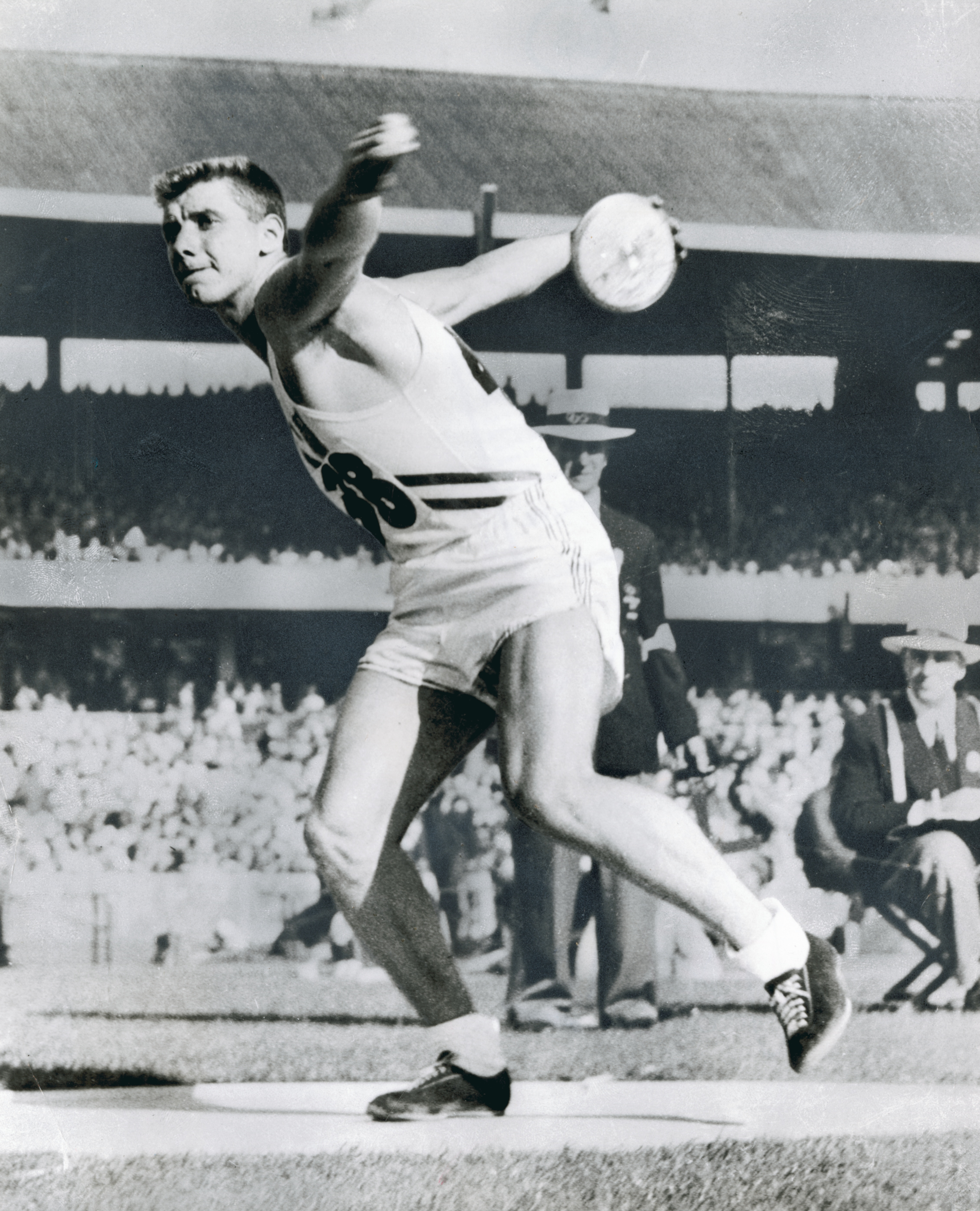
Secondly, most people did this spread out over several Olympics. Only American tracksters Alvin Kraenzlein (1900) and Jesse Owens (1936) and East German swimmer Kristin Otto (1988) accomplished this at a single Olympics, with Otto winning six gold medals in 1988. Six on this list took four Olympics to pull this off – Ray Ewry (1900-08), Rudolf Kárpáti (1948-60), Al Oerter (1956-68), Lisa Leslie (1996-2008), Matthew Pinsent (1992-2004), and Ouellette (2002-14).

Al_Oerter1

Al Oerter

Topping the list is Ray Ewry, and you could quibble and say that that includes 1906, but even if we skip 1906, he tops the list with 8 gold medals in 8 events in which he competed – all standing jumps.

RayEwry

Ray Ewry

Next comes Otto and Hungarian fencer Kárpáti with their six gold medals, followed by two names on the list that you may not have suspected, who won five gold medals – American shooter Bud Fisher, who competed in 1920-24, and Russian synchro swimmer Anastasiya Davydova, who competed 2004-12.

If we limit this list to undefeated in four individual events only, six names remain, five Americans and Otto. Ewry still leads the list with 10, or 8 if you are picky, followed by five athletes with 4 individual gold medals in 4 events – Kraenzlein (ATH; 1900), Oerter (ATH; 1956-68), Otto (SWI; 1988), Archie Hahn (ATH; 1904-06), and Pat McCormick (DIV; 1952-56).

[table]

G,IG,Name,Gdr,Ssn,NOC,Sport

10,10,Ray Ewry,M,S,USA,ATH

6,4,Kristin Otto,F,S,GDR,SWI

6,2,Rudolf Kárpáti,M,S,HUN,FEN

5,2,Bud Fisher,M,S,USA,SHO

5,0,Anastasiya Davydova,F,S,RUS,SYN

4,4,Archie Hahn,M,S,USA,ATH

4,4,Al Kraenzlein,M,S,USA,ATH

4,4,Pat McCormick,F,S,USA,DIV

4,4,Al Oerter,M,S,USA,ATH

4,3,Jesse Owens,M,S,USA,ATH

4,2,Chen Ruolin,F,S,CHN,DIV

4,2,Deng Yaping,F,S,CHN,TTN

4,2,Harrison Dillard,M,S,USA,ATH

4,2,Bärbel Eckert-Wöckel,F,S,GDR,ATH

4,2,Jenő Fuchs,M,S,HUN,FEN

4,2,Viktor Krovopuskov,M,S,URS,FEN

4,2,Zhang Yining,F,S,CHN,TTN

4,0,Lisa Leslie,F,S,USA,BAS

4,0,Caroline Ouellette,F,W,CAN,ICH

4,0,Matthew Pinsent,M,S,GBR,ROW

4,0,Anastasiya Yermakova,F,S,RUS,SYN

[/table]

Quite a list containing many of the greatest Olympians ever. Bob Barney, Canadian Olympic historian, likes to end some of his tributes to athletes or scholars, by stating, “All honor to his/her name.” In this case, no finer acclamation could be given, so I’ll borrow from Bob. All honor to their names.

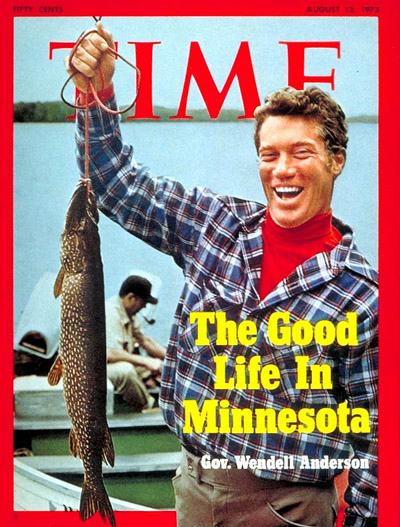
Wendell Anderson

Ice hockey player, silver medalist, governor, senator, lawyer

Full Name       Wendell Richard Anderson

Used Name    Wendell Anderson

Born                   1 February 1933; Saint Paul, Minnesota (USA)

[table]

Year-Games,Sport,Place,Medal

1956 Winter,Ice hockey,2,Silver

[/table]

http://www.sports-reference.com/olympics/athletes/an/wendell-anderson-1.html

Wendell Anderson played for the University of Minnesota, graduating in 1954, and won a silver medal in the 1956 Olympics, but his greatest fame came outside of sports. After the Olympics, Anderson entered the army where he spent the next two years. After his discharge he entered the University of Minnesota Law School, receiving an LL.B. in 1960. From then until 1970 he had a busy law practice in Minnesota, but he also became active in politics.
Anderson2
In 1962 Anderson was elected to the Minnesota Senate, and served until 1970. On 3 November 1970, Anderson was elected governor of Minnesota by a comfortable margin. He was re-elected governor in 1974 in a landslide victory. While in office, he expressed his concern for the environment and the family farmer by his support for new laws. He also signed into law several bills concerning judicial reform, and bills reforming existing laws on alcohol and drug use. In addition, in the inaugural World Hockey Association (WHA) draft of 1972, Anderson was drafted by the Minnesota Fighting Saints as a publicity stunt. He chose to remain governor.
Anderson
With the election of Walter Mondale as Vice-President in 1976, Governor Anderson resigned to replace Mondale in the United States Senate. He served in the Senate until 29 December 1978, when he returned to the practice of law in Minnesota. From 1995-2001, Anderson was the director and head of the legal committee for Turbodyne Technologies in California.

National Abbreviations at the World Cup and Olympics

With the World Cup going on, some people have wondered about the 3-letter hashtags (#USA or #GER) used on twitter for the various competing nations. The first time that national identifying abbreviations formally appeared at the Olympics was in 1952 at Helsinki.  They were not used in the Official Report, but did appear in the Daily Programs from that year.  The abbreviations were not strictly of the 3-letter style.  A few had 4-letters (USSR, CHIN = China), while some had only 2-letters (Finland = SF, Saar = SR), and several had 2-letters separated by a dash (Czechoslovakia = T-S, Great Britain = G-B, Hong Kong = H-K, New Zealand = N-Z, Puerto Rico = P-R). They have varied greatly over the years – one can see the article on these in Journal of Olympic History (Mallon/Karlsson.  “IOC and OCOG Abbreviations for NOCs”. Journal of Olympic History 12 (2): 25–28, May 2004.)

But FIFA (the football federation) and the IAAF (the athletics federation) also have their own set of 3-letter abbreviations (3LA) – and they are not always the same.

The only time this has really come up at the World Cup is with Nigeria, which has a 3LA of NGR from the IOC and the IAAF, but is NGA per FIFA.

There are 269 “countries” recognized by the 3 organizations, although many are not technically nations, and some 30 of them are now defunct. The IOC has had 232 different recognized geo-political entities (GPEs), and currently recognizes 204 National Olympic Committees (NOCs). FIFA has recognized 239 abbreviations, and currently recognizes 209 GPEs, while the IAAF has had 216 abbreviations, with 212 GPEs currently recognized. In addition, over the years, some nations change their IOC 3LA – such as Saudi Arabia, which used to be SAU, but is now KSA (=Kingdom of Saudi Arabia), and Iran, which was originally IRN by the IOC, but later changed to IRI = Islamic Republic of Iran. There are several other such examples – all noted in the article referenced above. The former Czechoslovakia alone had 8 different abbreviations used by varying Olympic Organizing Committees – T-S, CZS, CSL, CZE, CSV, CS, CZS, and TCH; and this does not include CZE and SVK after the nation split into Slovakia and the Czech Republic.

Currently, there are 198 GPEs recognized by the IOC, FIFA, and the IAAF. Of these 23 of them differ among the organizations. In 19 cases, the IOC and IAAF agree, but FIFA has a different 3LA, while in 4 cases, the IOC and FIFA agree but the IAAF has a different 3LA. There are also 5 cases of GPEs not recognized by all 3 organizations, but which have different 3LAs. The entire list is as follows:

[table]

NOC,IOC,FIFA,IAAF,Notes

Antigua & Barbuda,ANT,ATG,ANT,FIFA differs from IOC/IAAF

Bahrain,BRN,BHR,BRN,FIFA differs from IOC/IAAF

Barbados,BAR,BRB,BAR,FIFA differs from IOC/IAAF

Belize,BIZ,BLZ,BIZ,FIFA differs from IOC/IAAF

British Virgin Islands,IVB,VGB,IVB,FIFA differs from IOC/IAAF

Burkina Faso,BUR,BFA,BUR,FIFA differs from IOC/IAAF

Central African Republic,CAF,CTA,CAF,FIFA differs from IOC/IAAF

El Salvador,ESA,SLV,ESA,FIFA differs from IOC/IAAF

Equatorial Guinea,GEQ,EQG,GEQ,FIFA differs from IOC/IAAF

Guinea – Bissau,GBS,GNB,GBS,FIFA differs from IOC/IAAF

Indonesia,INA,IDN,INA,FIFA differs from IOC/IAAF

Iran,IRI,IRN,IRI,FIFA differs from IOC/IAAF

Latvia,LAT,LVA,LAT,FIFA differs from IOC/IAAF

Libya,LBA,LBY,LBA,FIFA differs from IOC/IAAF

Malawi,MAW,MWI,MAW,FIFA differs from IOC/IAAF

Nigeria,NGR,NGA,NGR,FIFA differs from IOC/IAAF

Palestine,PLE,PAL,PLE,FIFA differs from IOC/IAAF

Slovenia,SLO,SVN,SLO,FIFA differs from IOC/IAAF

United States Virgin Islands,ISV,VIR,ISV,FIFA differs from IOC/IAAF

,,,,

Congo DR (Zaire),COD,COD,ZAI,IAAF differs from IOC/FIFA

East Timor,TLS,TLS,ETM,IAAF differs from IOC/FIFA

Romania,ROU,ROU,ROM,IAAF differs from IOC/FIFA

Serbia,SRB,SRB,SER,IAAF differs from IOC/FIFA

,,,,

Anguilla,,AIA,ANG,IOC does not recognize

Faeroe Islands,,FRO,FAR,IOC does not recognize

Marshall Islands,MHL,,MSH,FIFA does not recognize

Montserrat,,MSR,MNT,IOC does not recognize

Turks & Caicos Islands,,TCA,TKS,IOC does not recognize

[/table]

Paralympians in the Olympics

Has anyone ever competed in both the Olympics and the Paralympics? You probably know us well enough by now to know the answer is yes, and most people assume we are referring only to Oscar Pistorius, the South African blade runner now on trial for the murder of his girlfriend. In fact, it has happened 14 times, although 3 were sighted guides at the Paralympics. The first ever was Neroli Fairhall, the New Zealand archer who competed at the 1980 Paralympics and the 1984 Olympic Games. Fairhall was a paraplegic after a motorbike accident, and competed as an archer from her wheelchair.

Here are the 13 Olympians / Paralympians:

[table]

Athlete,NOC,Sport,Olympics,Paralympics

Orazio Fagone,ITA,STK,1988-94,2006

Neroli Fairhall,NZL,ARC,1984,1980

Paola Fantato,ITA,ARC,1996,1988-2004

Assunta Legnante,ITA,ATH,2008,2012

Craig MacLean,GBR,CYC,2000-04,2012 (sighted guide)

Robin McKeever,CAN,CCS,1998,2010 (sighted guide)

Natalia Partyka,POL,TTN,2008-12,2000-12

Oscar Pistorius,RSA,ATH,2012,2004-12

Marla Runyan,USA,ATH,2000-04,1992-96

Jeroen Straathof,NED,CYC/SSK,1994-2004,2000 (sighted guide)

Pál Szekeres,HUN,FEN,1988,1992-2012

Natalie du Toit,RSA,SWI,2008,2004-12

Sonia Vettenburg,BEL,SHO,1992,1984-88

Ilke Wyludda,GER,ATH,1992-2000,2012

[/table]

See also http://www.sports-reference.com/olympics/friv/lists.cgi

The Unluckiest Olympians

In 2002 at Salt Lake City I was approached by Rick Reilly, the well-known Sports Illustrated writer, who asked me if I knew who had come the closest to winning medals without actually ever winning one. He wanted to know who had been the unluckiest Olympian. Unfortunately, our database was not as strong then as it is now and I was unable to give him a quick and easy answer.

But now we can answer that question for you – who has been the unluckiest Olympian. It depends slightly on how you define “unlucky” but we’ll offer you a couple choices.

  • If you want the Olympian without a medal and the most 4th places – that would be Mariya Itkina, an early Soviet-era sprinter who placed 4th four times at the Olympics, but never mounted the podium. Itkina was 4th in the 1956 4×100 metre relay, and three times in 1960 at Rome – in the 100 metres, the 200 metres, and the 4×100 relay again. She also finished 5th in the 400 at the 1964 Olympics. She only missed the top 5 once, failing to get past the heats in the 1956 200 metres.
  • Itkina was better at other meets. She was a four-time European Champion, winning gold in the 200 and 4×1 in 1954, and winning the 400 in both 1958 and 1965. She was a 17-time Soviet Champion, and won the 200 metres at the 1957 Universiade. She also set multiple world records, especially so with 7 in the 400 metres, an event that was fairly new for women in the 1950s.
  • If Itkina does not please you as a choice, how about Lisa Curry-Kenny, an Australian swimmer. Curry-Kenny also finished 4th or 5th in 5 Olympic events, as did Itkina. She was 4th in the 1984 200 IM and 4×100 free relay, while she finished 5th in the 1980 100 metre butterfly and 4×100 free relay, and in the 1992 4×100 medley relay. Curry-Kenny also claimed a 6th place in the 1980 medley relay. In all, Curry-Kenny competed in 13 Olympic events – 7 individual and 6 relays – at the 1980, 1984, and 1992 Olympics, but never mounted a podium. Shed no tears for Curry-Kenny, though. She was a 7-time gold medalist at the Commonwealth Games, and won 10 Commonwealth medals in all. She married Grant Kenny, an Ironman competitor who also competed at the Olympics in canoeing, and did bring the family an Olympic medal with a bronze in 1984 kayak doubles.
  • Lisa Curry-Kenny became a well-known Australian television personality and product spokesperson, and has received numerous awards for her career. She has been named a Member of the Order of the British Empire, is a member of Sport Australia Hall of Fame and the Queensland Sport Hall of Fame, has received the Medal of the Order of Australia, the Australian Sports Medal, the Centenary Medal, and at the 2008 Australian Day Honours, was made an Officer of the Order of Australia.
  • Danish badminton player Rikke Olsen also came close without mounting the Olympic podium. Olsen competed in 6 Olympic events, and finished 4th, or =5th (losing quarter-finalist), in all of them, all in doubles or mixed doubles. Maddeningly, she competed in three bronze medal matches (1996 women’s doubles, 2000 and 2004 mixed doubles) but lost all of them to finish 4th three times. Olsen was a nine-time Danish champion in doubles events, but internationally her major win was in the mixed at the 1995 Nordic Championships. She also never managed a World Championship medal, but did win three medals at the All-England Championships, a major championship in badminton.
  • Another option could be Tie Ya Na, a Hong Kong table tennis player. She competed in 6 Olympic events from 2004-2012 and finished =5th fully five times, although in table tennis, that means she was a losing quarter-finalist each of those times. Still a frustrating Olympic career. A native Chinese who emigrated to Hong Kong, she still competes as of 2014 and has won 9 medals at the World Championships, all in doubles or team events, but all silver and bronze, never managing a world title. Her biggest international victories have been at the Asian Games, with titles in mixed doubles in 2002 and the team event in 2005.
  • Going way back, we can also mention Greek shooter Frangiskos Mavrommatis, who competed at the Olympics in 1906, 1908, and 1912. Because of the plethora of shooting events in that era, Mavrommatis competed in 24 different Olympic events (1906-9, 1908-4, 1912-11). He finished 4th twice, 5th twice, and 6th twice, for 6 appearances in the top 6. But he never managed an Olympic medal.
  • At the Winter Games, we have two athletes who have finished in the top 6 six times at the Olympics, but never won a medal. Japanese short-track speed skater Satoru Terao finished 4th in the 1994 1,000 metres, 6th in the 2006 500 metres, and 5th four times – the 2002 500 metres, and the 5K relay in 1994, 1998, and 2002. Because of the wild nature of short-track, Terao was twice eliminated in preliminary rounds because of disqualifications or falls when he and another skater collided.
  • Marie Johansson-Risby was a Swedish cross-country skiier who had two 4th-place finishes – the 1976 4×5 km relay and the 1984 5 km; two 5th-place finishes – the 1984 20 km and 4×5 km relay; and two 6th-place finishes – the 1980 4×5 km relay and the 1984 10 km. But she never managed to win an Olympic medal. Johansson-Risby was a solid international competitor for years but was never quite at the highest level. She won one World Cup race in her career, a 5 km race in Finland in 1985, her final year in competition.

So there you have it. Great competitors all, but never had the luck to win an Olympic medal, despite coming close multiple times. Salute them for their great careers nonetheless.

Olympic Flag 100th Anniversary – Not Exactly

Several tweets and blog posts have commented that 15 June 2014 was the 100th anniversary of the unveiling of the Olympic Flag. This is not actually true, as we will note below, although it is the 100th anniversary of when the now familiar flag was approved by the IOC as its official symbol, but it had actually been designed several months earlier and displayed in April 1914 in Alexandria, Egypt.

The Olympic Flag has a plain white background with no border.  In the center is what is termed the Olympic Symbol, which consists of five interconnected rings.  They form two rows of three rings above, and two below.  The rings of the upper row are, from left to right, blue, black, and red.  The rings of the lower row are yellow and green.  The rings are thought to symbolize the five continents – Europe, Asia, Africa, Australia, and America.  The colors of the rings are thought to have been chosen because at least one of these colors can be found in the flag of every nation. Despite some commentaries I have seen, there is no designation of any of the colors to be assigned to any specific continent.

The origin of the flag’s design is in some dispute.  It was designed by Baron Pierre de Coubertin to honor and represent the 1914 Olympic Congress in Paris.  Some sources state that de Coubertin saw the rings at Delphi in 1913, but classics scholars believe this is highly unlikely and that they are of his own, modern invention. There is a picture of the rings at Delphi, but these were almost certainly added after the Olympic Flag had been unveiled. It is known that de Coubertin had written a letter in 1913 with his design for the five rings at the top of the letter.

The idea of a flag was raised by the IOC in 1910 and a special committee worked to plan it.  Several suggestions were made, notably by Theodore Cook (GBR) and Clarence von Rosen (SWE), but little progress was made until de Coubertin came up with his design.  He commented in the August 1913 edition of Revue Olympique, “These five rings represent the five parts of the world from this point on won over to Olympism and given to accepting fruitful rivalry.  Furthermore, the six colors [including the white background] thus combined reproduce the colors of all the nations, with no exception.” The flag was first flown at Chatsby Stadium in Alexandria, Egypt for the Pan-Egyptian Games on 5 April 1914.  It was presented to the International Olympic Committee (IOC) by de Coubertin at the Olympic Congress in 1914 at the Sorbonne in Paris, where it was officially approved on 15 June 1914.  The flag was also flown in 1915 at the San Francisco Exhibition and at the 1919 IOC Session in Lausanne, before it made its début at the Olympic Games in 1920 at Antwerp, Belgium.  The “primary” Olympic Flag was thus known as “the Antwerp flag,” and has been the main Olympic Flag flown at the stadium at all Olympic Games through 1984.  In 1984, Seoul presented a new Olympic Flag to the IOC, made of fine Korean silk, which was first flown at the 1988 Olympics.  A second “primary” Olympic Flag is used for the Olympic Winter Games, which was donated in 1952 by the host city of Oslo, Norway.

The Olympic Flag is raised at the Opening Ceremony and flies over the main stadium throughout the Olympic Games.  It is lowered at the Closing Ceremony of the Olympic Games.  The mayor of the Olympic Host City then presents the Olympic Flag to the mayor of the next Olympic Host City.  The flag is to be kept in the town hall of the host city until the next Olympic Games.

The Olympic Symbol of the five rings is now strictly regulated by the IOC, with strict design standards, and color regulations in Pantone© colors for the five rings. The Olympic Symbol and Olympic Flag are the exclusive property of the IOC and cannot be used without authorization.

NBA Champions/Medalists and the Olympics

With the San Antonio Spurs winning the NBA Title last night, here is a similar list to our Stanley Cup / Olympic Gold list. This is the list of basketball Triple Crown Winners – all those winning an NCAA Title, Olympic Gold, and NBA Championship. All 7 of the players are from the USA, as one would expect. And no, nobody on the Spurs was added to this list last night. American Tim Duncan (although he was born in the Virgin Islands and his sister, Tricia, swam for the Virgin Islands at the 1988 Olympics) on the team has an Olympic medal, playing on the bronze-medal winning 2004 team, and has won 5 NBA titles with the Spurs (1999, 2003, 2005, 2007, 2014), but Argentine Manu Ginóbili won a gold medal in 2004 and a bronze medal in 2008. He has played on NBA Champions with the Spurs in 2003, 2005, 2007, and 2014 and is one of the few non-Americans to have won an Olympic medal and an NBA Championship. The lists below show the 7 players to have won the Triple Crown and all non-Americans to have won an Olympic medal and an NBA title:

[table]

Name,Olympics,NCAA,NBA Titles

Quinn Buckner,1976,1976 Indiana Univ,1984 Boston Celtics

Magic Johnson,1992,1979 Michigan State Univ,1980/82/85/87-88 Los Angeles Lakers

K. C. Jones,1956,1955-56 Univ San Francisco,1959-66 Boston Celtics

Michael Jordan,1984/92,1982 Univ North Carolina,1991-93; 1996-98 Chicago Bulls

Clyde Lovelette,1952,1952 Univ Kansas,1954 Minneapolis Lakers; 1963-64 Boston Celtics

Jerry Lucas,1960,1960 Ohio State Univ,1973 New York Knicks

Bill Russell,1956,1955-56 Univ San Francisco,1957; 1959-66; 1968-69 Boston Celtics

[/table]

For the record, unlike ice hockey, no player has ever won Olympic Gold, NBA/NHL Championship, and a World Championship (31 hockey players thru 2010).

[table]

Name,Olympics,NBA Titles

Toni Kukoc,1988/1992 silver (YUG/CRO),1996/97/98 Chicago Bulls

Zelly Rebrača,1996 silver (SCG),2004 Detroit Pistons

Manu Ginóbili,2004 gold/2008 bronze (ARG),2003/05/07/14 San Antonio Spurs

Fabricio Oberto,2004 gold/2008 bronze (ARG),2007 San Antonio Spurs

Pau Gasol,2008/12 silver (ESP),2009/10 Los Angeles Lakers

[/table]

In addition, Hakeem Olajuwon won NBA Titles with the 1994/95 Houston Rockets and won an Olympic gold in 1996, but by then he had taken US citizenship and played for the USA. Two other foreign players who came close to this list were Luc Longley (AUS-1988/2000), Bill Wennington (CAN-1984), who both finished 4th at the Olympics (Longley twice), and played on NBA Champions – both with the Bulls from 1996-98.

Prince Bira

Prince,Sailor,Race Car Driver,Pilot,Liked to Marry

Full name              Birabongse Bhanudej Bhanubandh

Used name           Birabongse, Prince Bhanubandh

Original name    พีรพงศ์ ภาณุเดช

Other names      B. Bira, Prince Bira

Born                        15 July 1914; Krung Thep (Bangkok) (THA)

Died                         24 December 1985; London, Greater London (GBR)

[table]

Year-Games,Sport,Event,Team,Finish

1956 Summer,Sailing,2-Person Keelboat,Luang Pradiyat Navayudh,12

1960 Summer,Sailing,2-Person Keelboat,Boonpuen Chomvith,19

1964 Summer,Sailing,3-Person Keelboat,Linglom (boat),22

1972 Summer,Sailing,2-Person Keelboat,Paitane Chulgatuppa,21

[/table]

http://www.sports-reference.com/olympics/athletes/bh/birabongse-prince-bhanubandh-1.html

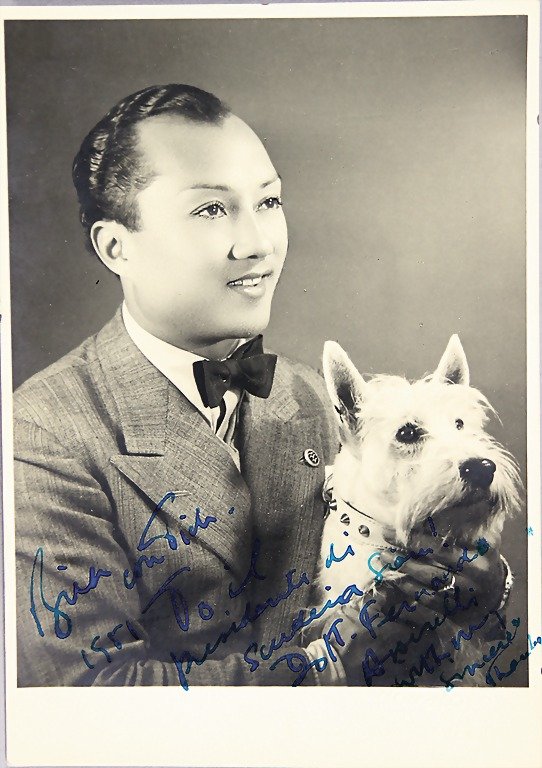
A grandson of King Mongkut, loosely portrayed in “The King and I” and “Anna and the King,” His Serene Highness Prince Birabongse Bhanudej Bhanubandh of Siam was educated at Eton and Cambridge. His mother died when he was only 4-years-old, and his father died while he was at Eton, leaving him an orphan. He moved in with a cousin in London, Prince Chula, and was accepted for Trinity College at Cambridge, but never graduated.
Bira2

Prince Bira became involved in automobile racing in the 1930s, and singlehandedly established Thailand’s racing colors. Initially competing under the pseudonym of “B. Bira”, Bhanudej became best known as Prince Bira. Between 1950 and 1954, he competed in 19 Formula One World Championship races, scoring championship points on three occasions for a career total of eight. His best result was in the 1950 Swiss Grand Prix, in which he finished fourth in a Maserati. No other southeastern Asian driver would compete in Formula One until 2001 when Malaysian Alex Yoong raced for Minardi. Prince Bira also raced with some success in British rally cars.

Returning to Thailand in 1955, Prince Bira switched attention to a different hobby: sailing. He represented his country four times at the Olympics, although never with any significant success. Prince Bira was also instrumental in getting the Fireball World Championships to Thailand in 1978. In addition to race car driving and sailing, he was also an excellent pilot, both of gliders and motorized planes, and once flew his own two-engine plane from London to Bangkok.
Bira

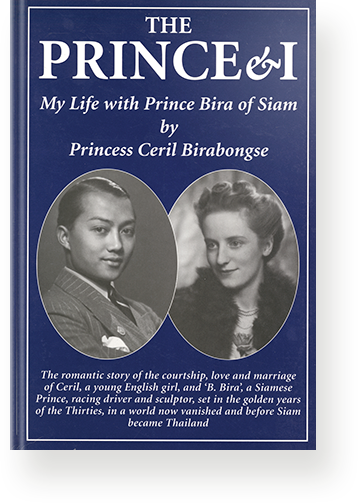
Bira, who died of a heart attack in the London Underground in 1985, is remembered for his exploits by the Bira International Circuit outside Pattaya, and the Prince Bira Memorial Regatta, held since 1990. Prince Bira was married six times, twice to the same woman, Ceril Heycock, or the Princess Ceril Birabongse. They were married from 1938-49 and in what must be some sort of record, after 4 more wives, they were married again 34 years later, in 1983.

Olympic Footballers – Gold Medalists and World Cup Champions

With the 2014 World Cup now underway it may surprise many of you just how few people have performed the feat of winning both Olympic gold and a World Cup winners medal. It’s only been done 11 times in the men’s game and, since the last time it happened was in 1938, there is now no man alive who has achieved the feat. Despite women’s football having spent less than 20 years as an Olympic event it’s already been 15 times on the female side, mostly by Americans.

The fact that the World Cup only began in 1930 and was dominated by professionals post World War Two gave only a small window for the Olympic/World Cup double to be realistically achieved until the advent of professionals in the late 80s.
That’s why the 11 names on the list all came from the 1930s.
7 come from the Uruguay team of the late 20s and early 30s and the other 4 from the Italian team of the late 30s.
As for Brazilians? There aren’t any. Brazil have been so far thwarted in their attempts on the Olympic championships although with a home Olympics following a home World Cup this may well change.

The women’s tournament, free of the artificial restrictions that plague the men’s event, has already seen more do the double since 1996 than in the 114 year history of men’s Olympic football.

Jose Andrade

Men (11)
[table]

Athlete,NOC,Olympic Gold,World Cup
José Andrade, URU, 1924-28, 1930
Héctor Castro, URU,1928,1930
Pedro Cea, URU, 1924-28, 1930
Lorenzo Fernández, URU,1928,1930
Alvaro Gestido, URU,1928,1930
José Nasazzi, URU, 1924-28, 1930
Héctor Scarone, URU, 1924-28, 1930,
Sergio Bertoni, ITA, 1936, 1938
Alfredo Foni, ITA, 1936, 1938
Ugo Locatelli, ITA, 1936, 1938
Pietro Rava, ITA, 1936, 1938

[/table]

Women (15)
[table]

Athlete,NOC,Olympic Gold,World Cup
Michelle Akers,USA, 1996, 1991 & 1999
Tisha Venturini,USA, 1996, 1999
Brandi Chastain,USA, 1996 & 2004, 1991 & 1999
Joy Fawcett,USA, 1996 & 2004, 1999
Julie Foudy,USA, 1996 & 2004, 1991 & 1999
Mia Hamm,USA, 1996 & 2004, 1991 & 1999
Kristine Lilly,USA, 1996 & 2004, 1991 & 1999
Shannon MacMillan,USA, 1996, 1999
Tiffeny Milbrett,USA, 1996, 1999
Carla Overbeck,USA, 1996, 1999
Cindy Parlow,USA, 1996 & 2004, 1999
Christie Pearce-Rampone,USA, 2004 2008 & 2012, 1999
Tiffany Roberts,USA, 1996 & 2004, 1999
Briana Scurry,USA, 1996 & 2004, 1999
Kate Sobrero-Markgraf, USA, 2004 & 2008, 1999
Gro Espeseth,NOR,2000,1995
Bente Nordby,NOR,2000,1995
Marianne Pettersen,NOR,2000,1995
Hege Riise,NOR,2000,1995

[/table]

Mia Hamm

Looking to add their names to the list this year will be the following players. Cameroon won Olympic gold in 2000, Argentina in 2004-08, and Mexico in 2012, defeating Brazil in the final match. (Yuichi Nishimura was not refereeing the Mexico-Brazil match in London.)

Cameroon
Samuel Eto’o

Mexico
José de Jesús Corona
Carlos Salcido
Diego Antonio Reyes
Javier Aquino
Giovani dos Santos
Marco Fabián
Héctor Herrera
Raúl Jiménez
Oribe Peralta
Miguel Ángel Ponce

Argentina
Ezequiel Garay
Ezequiel Lavezzi
Fernando Gago
Javier Mascherano
Lionel Messi
Ángel di María
Pablo Zabaleta
Sergio Agüero
Sergio Romero

This is not an easy thing to do. Both the Olympics and the World Cup only take place every four years and teams cannot even use all the same players in the two tournaments – there are some age limits at the Olympics. Further, not all teams compete in both events. Great Britain competes at the Olympics, while England, Scotland, Wales and Northern Ireland have separate teams for the World Cup. If we limit ourselves to the World Cup era (1924-2012), here are the only nations that have even won both an Olympic and a World Cup title – note that Brazil is not on this list. Brazil has won 5 World Cups but never won an Olympic gold medal.
[table]
Winning Both,World Cup,Olympics
Italy,4,1
Argentina,2,2
Uruguay,2,2
France,1,1
Spain,1,1
[/table]