Christmas Greetings From Olympstats

At the end of the year it’s been a tradition for Olympstats to post something to mark the holidays. This time we’ll focus on sportspeople and people who have other Olympic connections who were born at this time of year.

December 24 – Christmas Eve.

King George of Greece

The first person to mention was no Olympian in the standard sense but instead an important figure in the revival of the Games and whose family connections with Olympism span over three centuries.

Christian Wilhelm Ferdinand Adolf Georg  von Schleswig-Holstein-Sonderburg-Glücksburg was a prince of Denmark who was offered the Greek throne as a 17-year-old after the overthrow of the unpopular King Otto. As King George he offered his royal patronage to the 1896 Olympic Games and, later, the 1906 Intercalated Games, both of which increased his stature with the Greek public. In the fiftieth year of his reign, despite Greek successes in the first Balkan War, he lost his life to a gunman’s bullet. The assassin was variously described as an anarchist or mentally disturbed.
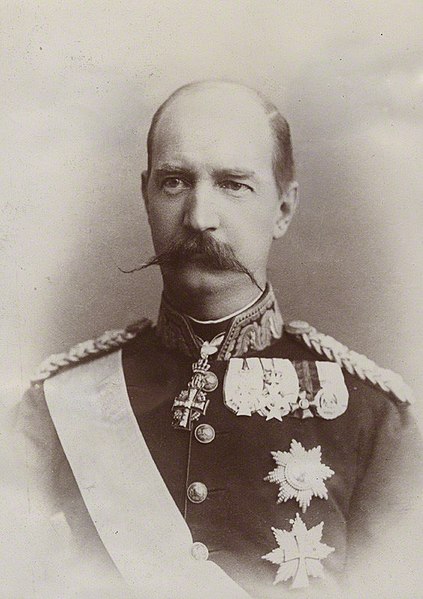
by Unknown photographer, bromide print, published 1912

George’s son Constantine (Konstantinos) served as president of the Olympic Organizing Committees in 1896 and 1906 and his grandson, also George, served as president of the Greek Olympic Committee.

Another grandson, Prince Phillip of Great Britain, emulated his grandfather by officially opening the 1956 Olympic Games in Melbourne while a great-grandson, Prince Crown Prince Konstantinos (Constantine) was an Olympic champion in sailing. If you add in his links to the British and Spanish royal families, his bloodline links the first Olympic Games to the present day of 2022.

Anton Heida

In contrast, Anton Heida was not born into an aristocratic family. In fact after his competitive gymnastics career was over he performed in vaudeville as part of an acrobatic act called “The Olympic Trio”.

His unusual Olympic claim to fame is that he could be credited to have competed at the same Olympic Games for two different nations.  He was an Austrian native and when he won the team and individual all-around gold medal in the July turnverein competition, he was still an Austrian citizen. But he became a US citizen (which required that he renounce Austrian nationality) on 17 October 1904, so he was an American at the time of the late October gymnastics events

Alexis McAllister

Moving forward by more than a decade, Alexis McAllister was perhaps the outstanding performer in the 2022 FIFA football World Cup final. Unfortunately for him, Argentina were knocked out of the 2021 Tokyo Olympic Games in the group stage after a surprise loss to Australia

December 25 – Christmas Day

Freydoun Malcolm Khan

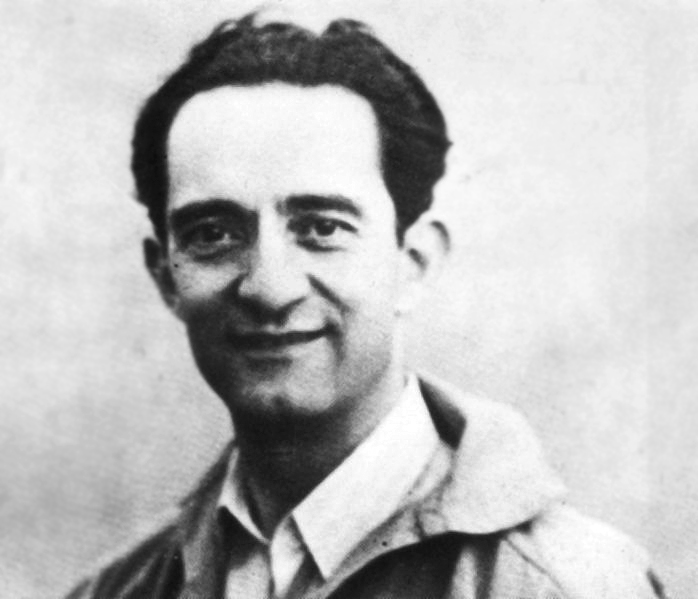
It’s an odd thought that the first Olympian produced by Iran was actually born on the holiest of Christianity’s holy days. Freydoun Malcolm Khan was born into Armenian-Persian aristocracy in London where his father was serving in London as minister plenipotentiary and later as ambassador.  His Olympic career saw him qualify for the second round of the Épée competition in 1900 but progress no further.

Noël Delberghe

An Olympic champion born on Christmas Day and with the given name Noël probably  fits the criteria to be mentioned in this post as well as anybody ever could be. Previously Great Britain had won all four Olympic water polo tournaments they had competed in but in 1924 they were defeated by the Hungarians by the odd goal in thirteen in their first round match. The Hungarians themselves were routed by Belgium in their next match and this led to a France versus Belgium final.

The French team, which included Delberghe from the Belgian border town of Tourcoing as one of their defenders, shut out their opponents for a memorable gold medal win.

Emanoul Aghasi

The second Iranian Olympian we mention to have been born on Christmas Day was also an ethnic Armenian. Better known as father to tennis superstar Andre Agassi, Emanoul competed at the London Olympics of 1948 and also four years later in Helsinki but lost his first boxing bout on both occasions. Aghasi retired from active competition after the 1952 Games and moved to Chicago to join his brother, renaming himself “Mike”.

Christ Noël Yarafa

To move things up a notch, it seems Christ Noël Yarafa of the Central African Republic is the ultimate in aptly named Olympians.  His Olympic performance was not outstanding as his national team finished 29th of 30 teams in the teams time trial in 1992, one team did not complete the course, but as president of his country’s national cycling federation he is credited with almost single-handedly keeping the sport alive amid all the violence in the country, coaching and inspiring many young cyclists in Central Africa despite a chronic lack of funding for the sport.

Oleksiy Sereda

Oleksiy Sereda was born in 2005 and, as such, is still only 15 at the time of me writing this.

Already the Ukrainian has proved to be a stellar talent in the world of diving and has won medals in both the World and European championships and finished in the top six at the Olympic  Games on Tokyo. He has the potential to be a leading light for both his sport and trouble torn country for many years to come.
1920 British Olympic Mysteries

Today on Oldest Olympians, we wanted to cover a few British mysteries from the 1920 Antwerp Olympics that were forwarded to us by Connor Mah. As you can imagine, there is not much information on these cases, but we wanted to share them in the hopes that perhaps someone out there can identify these individuals.

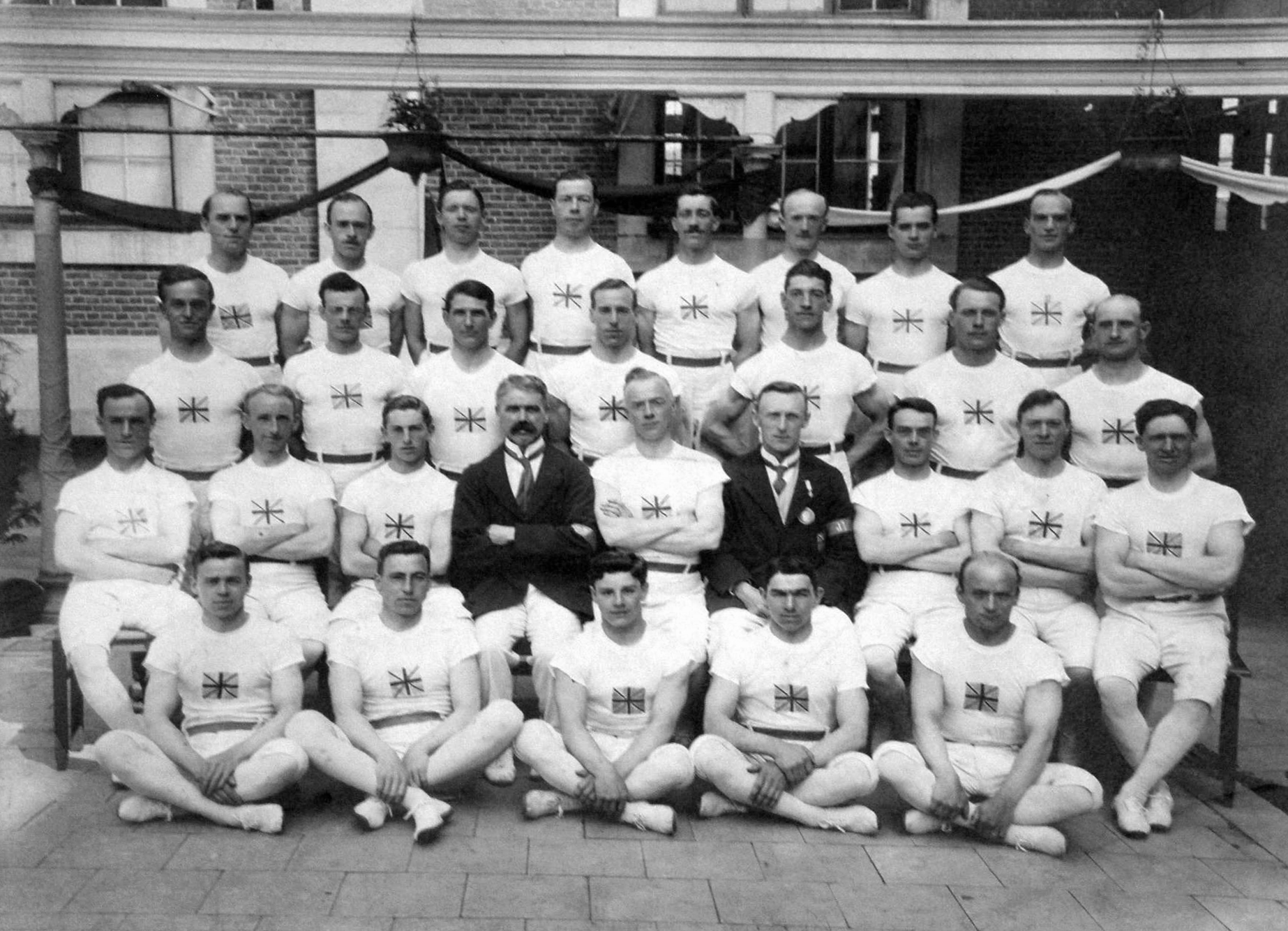
(The 1920 British Olympic gymnastics squad: Harris is third from the left in the back row, Page is first on the left on the second row down, and Taylor is second from the left in the front, seated row)

Three of the individuals were members of the gymnastic team that came fifth and last in the tournament: A. E. Page, H. W. Taylor, and J. Harris. A possibly candidate for Page is Alfred Elliot Page, born January 20, 1892 and died in January 1980, as he was from Ipswich, which would align with his club of the East Anglian Amateur Gymnastics Association, but we cannot verify this. Unfortunately, Taylor and Harris have names that are far too common to have even suggested candidates, although we do know that Taylor was a reserve with the Northampton Polytechnic Institute that won the Adams Shield in 1925.

For the other three, we at least have full names, although featherweight boxer Fred Adams was generally referred to only as “F Adams” or “F. T. Adams”, so we cannot be certain that his name is accurate. He competed in the national championships for the entirety of the 1920s, although he never won a title. At the 1920 Antwerp Olympics, he was eliminated in round two. Non-finishing road cyclist Edward Newell, meanwhile, might have been Edward Albert Newell, born September 28, 1901 and died in 1978, although we cannot be certain because the only other information that we have on his career is that he was a reserve with the English team at the inaugural 1921 World Championships. Finally, George F. Piper, who was 29th in the marathon, had an extensive career that lasted over two decades, and he might have been George Frederick Piper, born September 5, 1883 and died December 1966 in London. We have not, however, been able to confirm this.

Updates to Austrian Olympic Mysteries

Today on Oldest Olympians we wanted to continue highlighting Connor Mah’s excellent recent research, as he has expanded our biographical data on Swiss, Austrian, and Belgian Olympians significantly. Just as in a previous entry on this subject, we wanted to note some of those updates that involve past Olympic mysteries that were featured on this blog.

(Fritz Weinzinger)

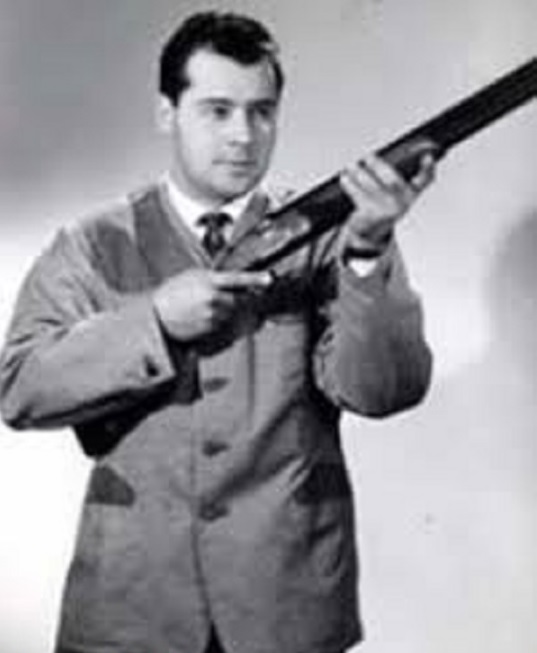
Three of these updates involve confirmation of Austrian data that we suspected previously, but could not prove. First, track athlete Emil Hübscher, born September 3, 1912, who competed in two events in 1936, did die on February 25, 1958. Another athlete, Fritz Weinzinger, born July 14, 1890, who competed in two events in 1912, has been confirmed as the individual who died May 22, 1963. Finally, Mah was able not only to demonstrate that 1948 sport shooter Andreas Krapf died in 2000, as claimed on Wikipedia, but to provide a full date of death of February 7, 2000.

(Grete Neumann)

Not all of his updates were confirmatory, however. We suspected that another 1936 athlete, Grete Neumann, might have been the individual of the same name who died February 8, 1996, although we admitted that it was unlikely due to differences in the month of birth between the two. We were right to be skeptical, as the Olympian actually died nearly a half century earlier on September 14, 1946. Mah also discovered, however, that her listed year of birth was incorrect, and that she was born June 19, 1912. Moving to Switzerland, he also found that we knew nothing about 1928 Swiss Olympic cyclist Erich Fäs because we had the wrong name – the competitor was actually Ernst Fäs, born 1909, who died in August 1980.

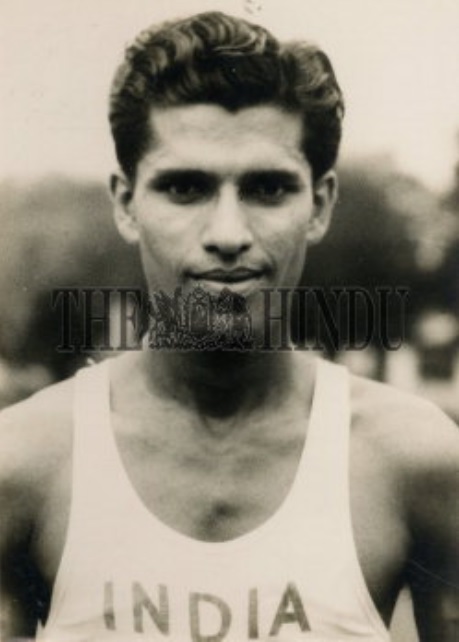
(Ivan Jacob, pictured at The Hindu)

Finally, as might be considered fitting for an end-of-the-year type blog post, Mah was able to provide an update on one of the Olympians that was last known to be alive in 2011: Indian athlete Ivan Jacob, who we believed was born January 1, 1928. It turns out that this was a placeholder date, as he was actually born July 15, 1925, and died February 5, 2009.

Recent Ice Stock Sport Updates

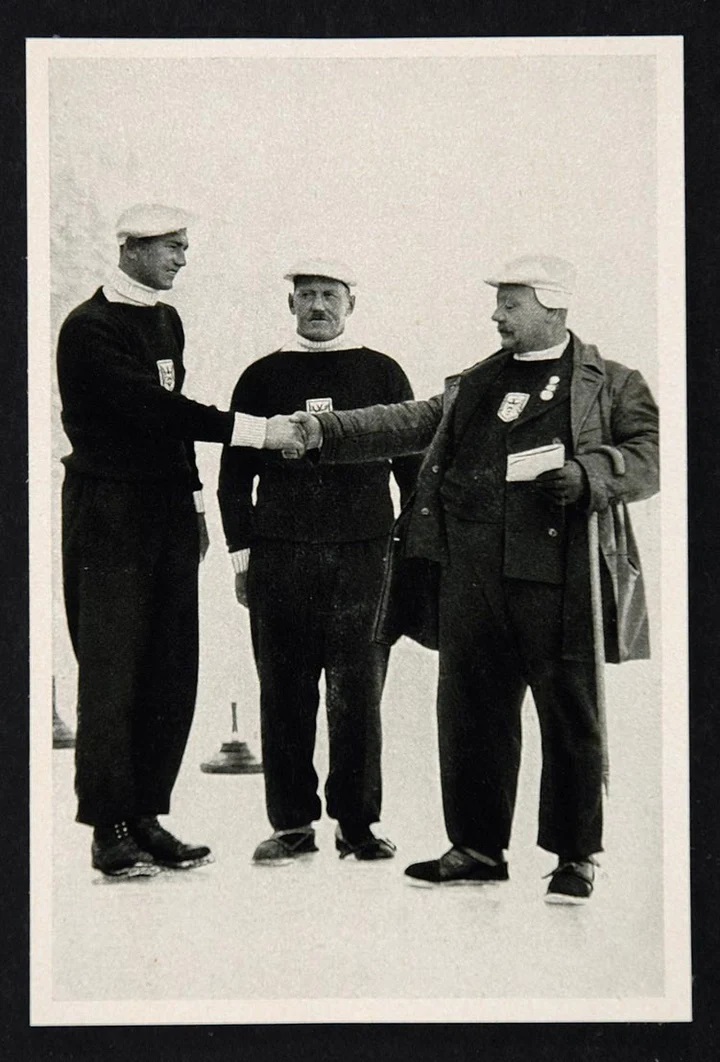
Today on Oldest Olympians we want to return to eisstockschießen, or “ice stock sport”, at the 1936 Garmisch-Partenkirchen Olympics. Since we last posted on this topic, Ralf Regnitter has uncovered some of the biographical details of these unknown players, beginning with Therese Ryhiner. Ryhiner was one of the few that we had a full date of birth for, April 3, 1887, because we had a picture of her Olympic ID card. From this, Regnitter was able to find her date of death: September 30, 1947.

He did not stop there, however, and was able to locate biographical data for some of the individuals that we had mentioned previously on this blog: Maria Clausing, Gertrud Großberger, and Mathilde Seyffarth. Additionally, he solved a few cases that we had not yet gotten to: Ludwig Fruth, Alois Kneitinger, Lorenz Kollmannsberger, and Korbinian Witting. All the new data is viewable from the pages at Olympedia’s coverage of ice stock sport in 1936.

In that spirit, we wanted to throw out a few additional names from the tournament that we have yet to cover. Kollmannsberger competed exclusively in individual events, but the other three took part in the team event as members of Eisstock-Club Partenkirchen, where they placed seventh. We are still missing data on two of their teammates: Sebastian Groeß and Josef Neuner.

Kollmannsberger, meanwhile, came in second in the distance shooting event that was limited to Germans. The winner of that event was Hans Hacker of Eisschützen-Verein Gotteszell, while third place went to Josef Wirt of Eissportverein Bad Aibling. The Bad Aibling club also came second in the German team event, with Wirt, Ludwig Retzer, Martin Geisenhofer, Josef Kreitmeier, and Josef Lechner. Gotteszell, with Hacker, Hans Hackl, August Brunner, Anton Bilmeier, and Karl Weber, settled for fourth.

(Anton Bielmeier, pictured at Bayerischer Landtag)

Anton Bilmeier might have been Anton Bielmeier, born September 1, 1901 and died January 6, 1958, who was a politician from the same region as Gotteszell, but we have no proof. We also do not know if he is any relation to Hans Bielmeier, who represented Straubing in the international team event. For the rest of those that we have mentioned, we have no leads at all. For now, we do not want to overwhelm, so we will stop here, but we will certainly pick up this tournament again in the future!

Updates to Swiss Olympic Mysteries

Today on Oldest Olympians we wanted to highlight some great recent research from Connor Mah, who has expanded our biographical data on Swiss and Austrian Olympians significantly. While there are far too many names to cover in a single post, we wanted to highlight some of the updates that involve past Olympic mysteries that were featured on this blog.

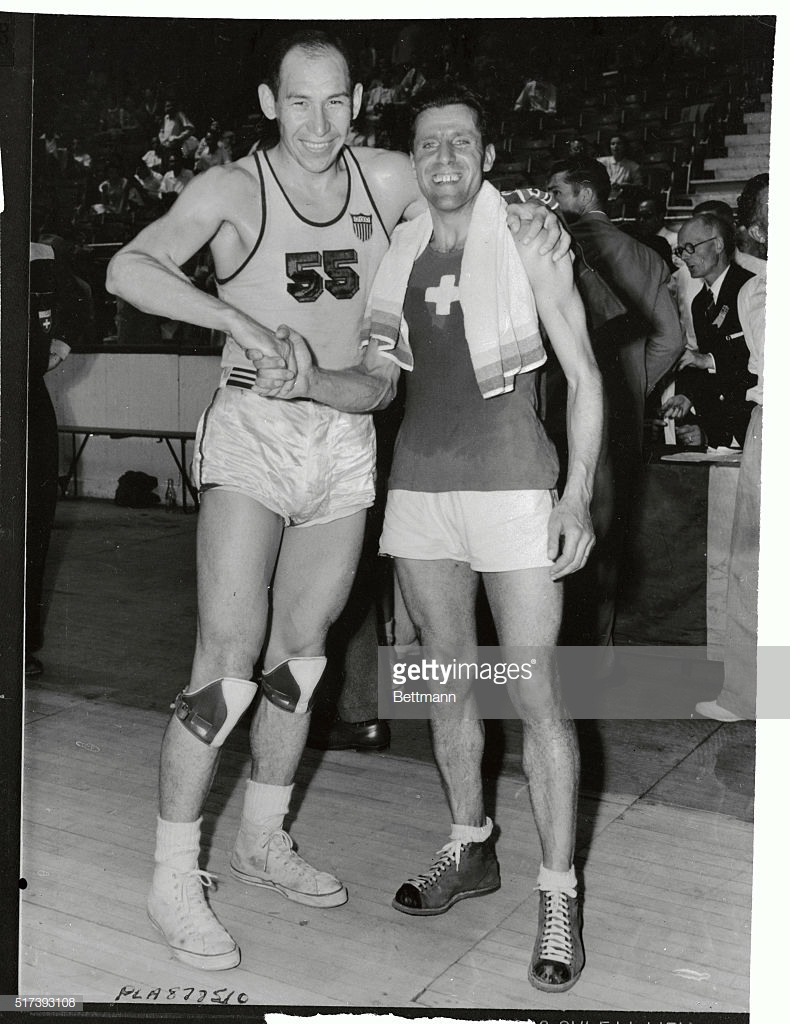
(Original Caption) Jesse Renick, of Bartlesville, Oklahoma, captain of the U.S. Olympic basketball team (left) is congratulated by Maurice Chollet, captain of the Swiss team, after the Americans had whipped their opponents 86-21 at Harringay Stadium on July 30th. The American boys have since bettered a Czech five, 53-28.

(Maurice Chollet, pictured on the right at Getty Images)

Starting with Switzerland, back in June Mah was able to confirm that the Hugo Vonlanthen who was listed as dying on April 28, 2009 was in fact the Olympic field hockey player. Then, earlier this month, he verified that the obituary for a Maurice Chollet who died February 22, 2017 was for the two-time Olympic basketball player. Most recently, he was able to confirm that the Kurt Bryner who died in Cape Verde in February 1984 was the two-time Olympic sailor.

(Adolf Müller, with the moustache in the background)

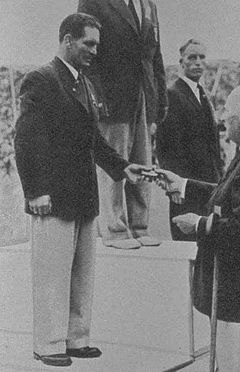
In-between, Mah was also able to solve several other Swiss Olympic mysteries. Firstly, 1936 Olympic canoeist Rudolf Vilim did die in February 1959. The Wikipedia date of death of August 28, 2005 for field hockey player Roland Annen was also confirmed as correct. He also proved that the January 2017 obituary for a René Wohler was for the 1952 Olympic basketball player. Finally, he discovered that Adolf Müller, a wrestler who was one of our Olympic medal mysteries, died July 7, 2005.

(John O’Connor, pictured in the Northern Whig, June 18, 1951)

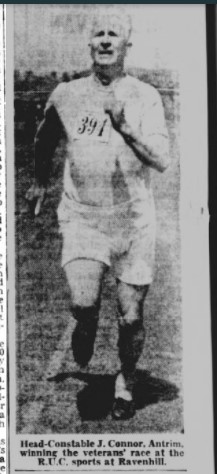
We also have a handful of non-Swiss updates. From Austria, Mah was able to confirm that water polo player Sebastian Ploner, born May 27, 1907, did die in December 1981 as suggested by the Vienna cemetery index. From Ireland, with some help from Emma Edwards, we learned that athlete John O’Connor died October 10, 1977. From Italy, Adriano Brunelli verified that Wikipedia’s date of death for Amedeo Banci, December 24, 2013, is correct. From El Salvador, we learned that sport shooter Tomás Vilanova did die in July 2007.

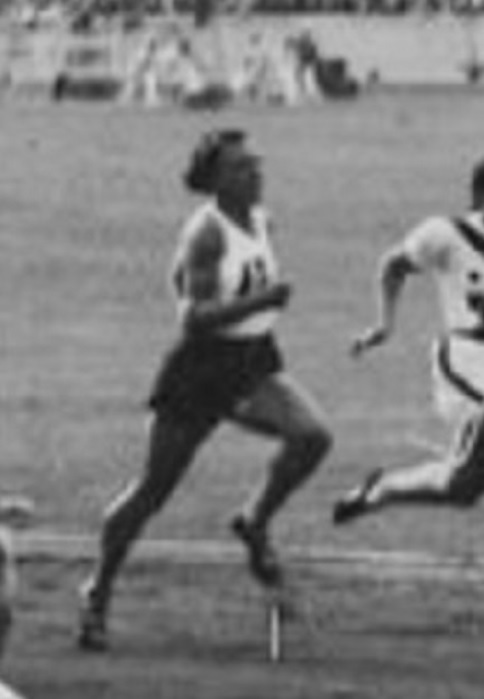
(Rosella Thorne pictured in “A Sporting Chance: Achievements of African-Canadian Athletes” by William Humber)

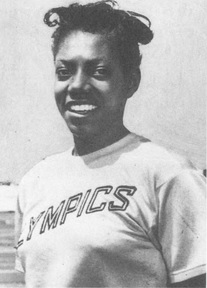
Finally, a few days ago we featured Canadian track and field athlete Rosella Thorne, a previous Olympic mystery born December 11, 1930, as our Olympian of the day based on information that she was still alive. Sadly, it turns out that she died April 16 at the age of 91.

Update to the Historical List of the Oldest Living Olympians

Today on Oldest Olympians, we wanted to correct a mistake that we made in a previous post, one that concerns our historical list of the Oldest Living Olympians. Originally, we listed sport shooter Giuseppe Rivabella of Italy as the oldest living Olympian from April 8, 1896, the start of the military rifle, 200 metres event, until May 20, 1900, when French sailor William Martin, born October 25, 1828, began his first competition.

(Giuseppe Rivabella)

We recently learned from Diego Rossetti, however, that Rivabella was 63 when he died on August 24, 1919, which means that he was born in 1855 or 1856. This leads to a chance that Rivabella was never the oldest living Olympian, as American Charles Waldstein, born March 30, 1856, also competed in the same event. If Rivabella was born between April 1 and August 24, 1856, then he was never the oldest living Olympian and thus we have updated our tables to reflect this possibility.

(Kevin Wilson)

In terms of other age mysteries, we recently noted that Australian sailor Kevin Wilson, whom we had listed as being born March 18, 1923, may actually have been a few years younger. With the death of Frank Prihoda, we learned that this was indeed the case: Wilson was born December 15, 1927, making another sailor, Gordon Ingate, born March 29, 1926, the oldest living Australian Olympian. We have also been able to confirm details on two of our other Olympic mystery sailors. Manuel Escobar of El Salvador, born August 6, 1924, died March 8, 1995, giving us a more precise date that we suspected in our original post. Connor Mah, meanwhile, was able to verify that Canadian Olympic sailing mystery Dick Townsend was born April 29, 1928 and died November 22, 1982.

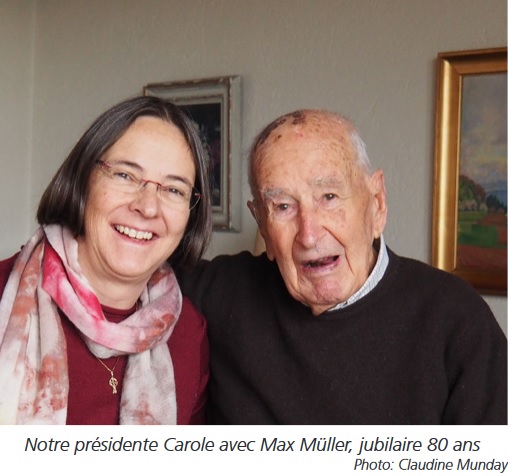
Max Müller

Thanks to recent research from Connor Mah, we have learned about the existence of a new Olympic centenarian! Swiss cross-country skier Max Müller, born June 27, 1916, died November 22, 2019 at the age of 103 years and 148 days. Müller represented his country in three events at the 1948 St. Moritz Games, finishing 17th in the 50 kilometers and 25th in the 18 kilometers. He was also fifth with the 4×10 kilometers relay squad. Domestically, he was a three-time national champion and later ran a sports store.

(Max Müller, pictured in a 2018 bulletin from Club Alpin Suisse)

While we are on the subject of potential centenarians, we also wanted to mention Australian sailor Kevin Wilson. Wilson represented his country in the Star class at the 1952 Helsinki Olympics, where he and his crewmate Bart Harvey placed 18th. Currently, we have Wilson as being born March 18, 1923, but travel documents suggest a year of birth of 1927 or 1928. We know that he was still alive in March 2021, but in the report he is mentioned as being 93 years old, which would align with the contemporary sources. While we are leaving him born in 1923 on our tables for now, it seems likely that he is several years younger, albeit still among the Oldest Olympians.

Paul Makler, Sr.

On October 22, on what we believed to be his 102nd birthday, we featured Paul Makler, Sr. as the oldest living American Olympian and Olympic fencer. After an investigation from George Masin, however, we learned that Makler had actually died on May 12, at the age of 101 years, 202 days.

(Paul Makler)

With this update, we now believe that swimmer Iris Cummings, born December 21, 1920, is the oldest living American Olympian. Cummings competed in the 200 metres breaststroke at the 1936 Berlin Games, making her the last known survivor from that edition. Soviet fencer Yulen Uralov, meanwhile, who took part in the foil tournament at the 1952 Helsinki Games, was still alive in 2018 and living in Israel. If he were still alive, he would be the oldest living Olympic fencer. If not, that distinction would likely go to Bernard Morel, who won a bronze medal for France in team sabre in 1952 and also competed in 1956.

While we are on the topic of Olympic uncertainties, it has come to our attention that the individual that we have listed currently as the oldest living Panamanian Olympian, Aurelio Chu Yi, born January 31, 1929, may actually be deceased. According to a source located by Connor Mah, he may have died in the 1990s, although the notice was vague and did not provide sufficient information to identify him definitively as the Olympian. As public records from Florida list him as still living, we have kept him on our lists, but are now aware that this may be in error.

(Mario Ghella)

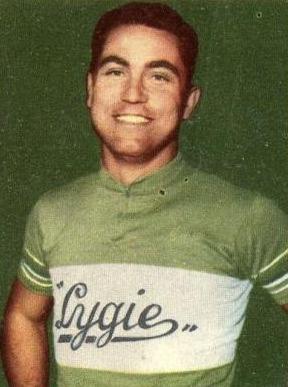
Finally, we wanted to address two recent removals that may have gone under the radar. First, we initially listed Dutch gymnast Nanny Simon, born June 23, 1931, as alive and living in Florida. Some findings by Connor Mah, however, proved that the American individual was not the Olympian, and thus we do not know if the Olympian is still alive. Secondly, we had listed Italian Olympic sprint cycling champion Mario Ghella, born June 23, 1929, as alive on our tables until recently. Adriano Brunelli, however, discovered that Ghella actually died February 10, 2020 in Spain, at the age of 90, demonstrating that even Olympic champions can sometimes die without receiving widespread notice.

International Competitors at the 1936 Ice Stock Sport Tournament

The last time that we discussed eisstockschießen, or “ice stock sport”, at the 1936 Garmisch-Partenkirchen Olympics on this blog, we brought up the lesser-known women who participated in the tournament. Today, we wanted to highlight the non-German teams that took part in the competition.

There were three events open to international competitors at Games – target shooting, distance shooting, and a team tournament – all of which were for men and all of which were won by Austrians. Ignaz Reiterer of Graz captured the target title well ahead of the rest of the field with 15 points. Two of his compatriots, Franz Lawugger and Josef Kalkschmid, shared a four-way tie for second, alongside August Brunner of Germany and Karl Wolfinger of Czechoslovakia. Reiterer did not compete in any other event, placing him in the company of German Hans Moser, Austrian Josef Marx, and Czechoslovakian Friedrich Czernich.

(Georg Edenhauser (left) and Friedrich Mosshammer (right))

The winner in the distance event was Georg Edenhauser, who was also relatively dominant. Second was his compatriot Friedrich Mosshammer, while third was Ludwig Retzer of Germany. Like Reiterer, Edenhauser and Mosshammer did not compete in other events, nor did their teammates Anton Schaffernak and August Ischepp, or Czechoslovakian Wilhelm Feistner.

The squad from Tirol, which consisted of Wilhelm Silbermayr, Anton and Otto Ritzl (whose relationship, if any, is unknown), Wilhelm Pichler, and Rudolf Rainer won the team tournament. Austrians also took third place with the Steiermark squad of Josef Hödl-Schlehofer, Johann Mrakitsch, Rudolf Wagner, Friedrich Schieg, and Hubert Lödler. A third Austrian team, from Kärnten, made up of Josef Hafner, Isidor Waitschacher, Josef Kleewein, Paul Begrusch, and Josef Maierbrugger, placed sixth.

The two Czechoslovakian teams, meanwhile, did not fare as well. Wolfinger teamed with Friedrich Brave, Friedrich Feistner, and Friedrich Arnhold to place seventh. Eight and last, meanwhile, went to Hans Bernhardt, Rudolf Kopal, Hans Großmann, Alfred Hein, and Otto Hanff. Unfortunately we know nothing of all of these competitors, but we hope that one day we will discover more about their lives and their contributions to the Olympic movement.

One (Maybe Two?) New Olympic Centenarian(s)

Today on Oldest Olympians we wanted to cover two art competitors, one of whom definitely reached the age of 100 and a second who might have.

The first, Iranian Abolhassan Sadighi, born October 5, 1894, was definitely a centenarian, as he died December 11, 1995 at the age of 101 years, 67 days. From a noble family, Sadighi eschewed his parents’ expectations and took up painting. He later shifted to sculpting and is best known for his statue of the Persian poet Ferdowsi, completed in 1971, that sits in Tehran’s Ferdowsi Square.

Sadighi entered an earlier statue of Ferdowsi into the sculpturing competition at the 1952 Helsinki Olympics. Since the art competitions at these Games were unofficial, they can be considered a non-medalling demonstration event, and thus Sadighi is not a full Olympian. Regardless, we find it worthwhile to mention him in this blog and on our tables, particularly as he is, to the best of our knowledge, the only Iranian associated with the Olympics to have reached the age of 100.

The more uncertain participant is Japan’s Hajime Ishimaru. Unlike Sadighi, Ishimaru competed in painting at the 1936 Berlin Olympics, so he definitely qualifies as an Olympian (at least as far as art competitors go). Ishimaru painted in several styles and was active both before and after World War II. He submitted a work listed as “The Sun Shines Most Beautifully Here”, although in Japanese it was titled simply “Seifuku”, which means “conquest”. Ishimaru was born in 1890 and died in 1990 but, without exact dates, we cannot be certain that he was a centenarian.

All the Olympic Stats You'll Ever Need